Essays
Portraits of Four
An incomplete series of four paintings.
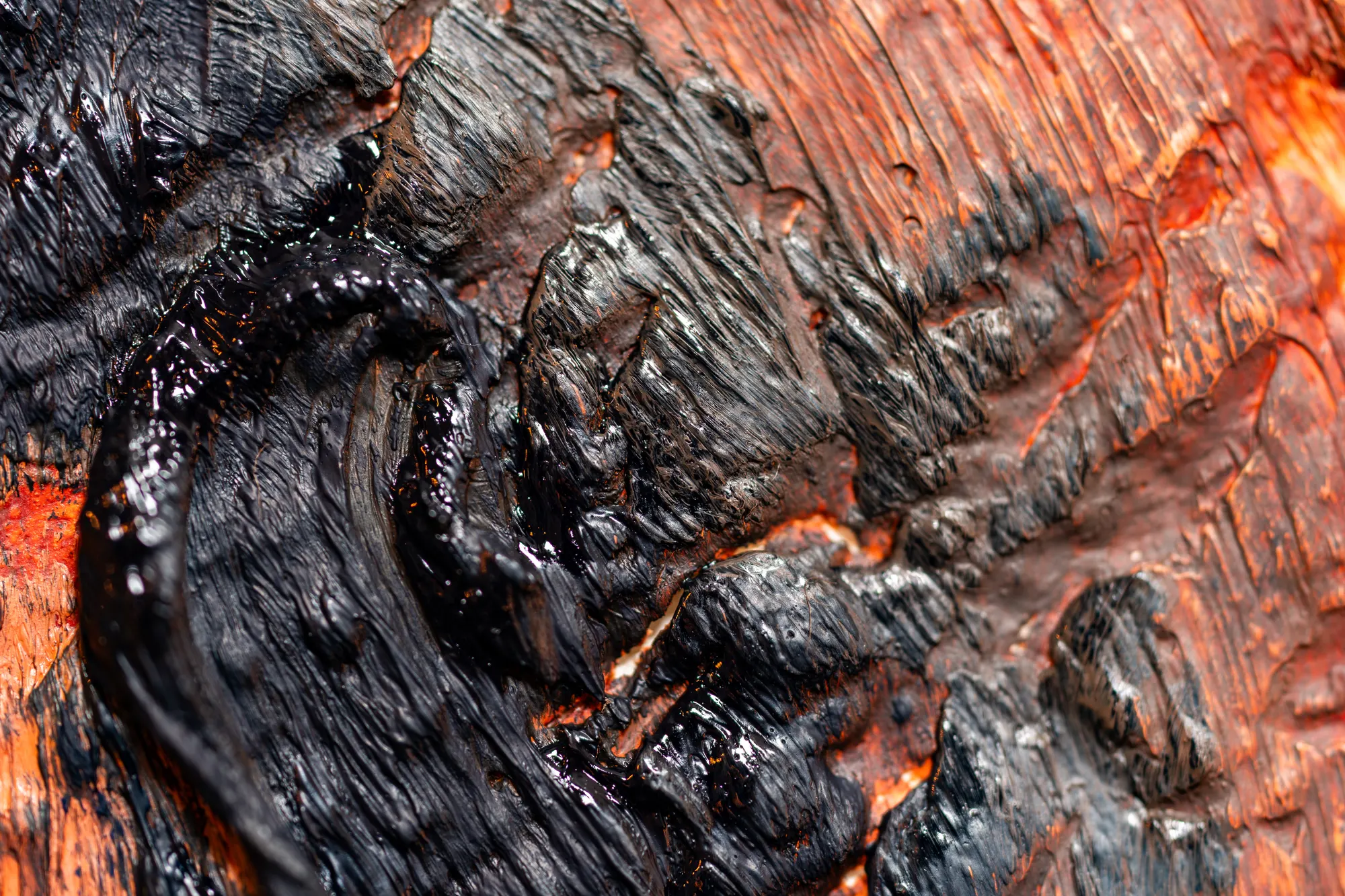
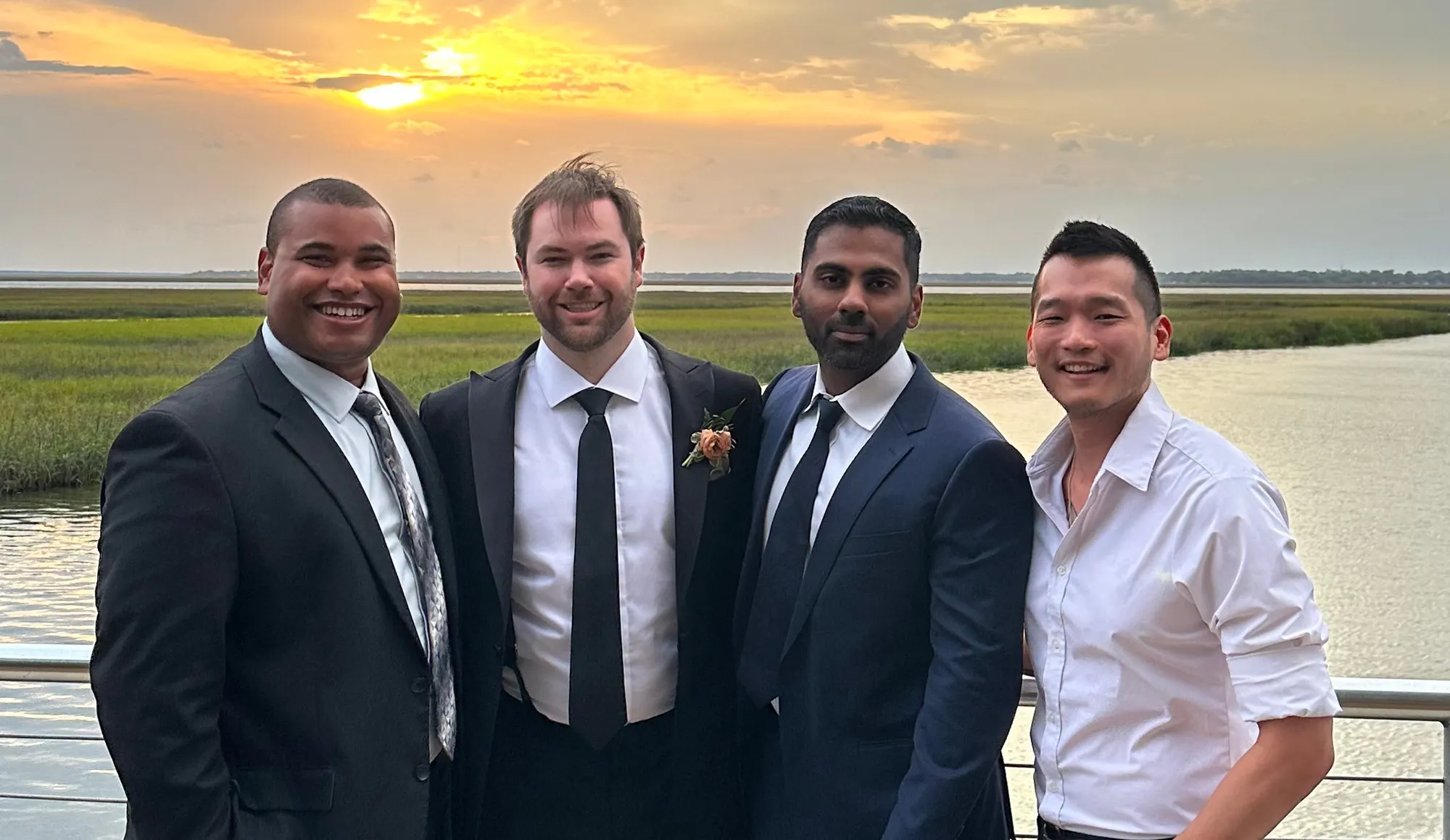
Four of us. Three paintings so far. Each one abstracted from a photograph taken at one of our weddings.
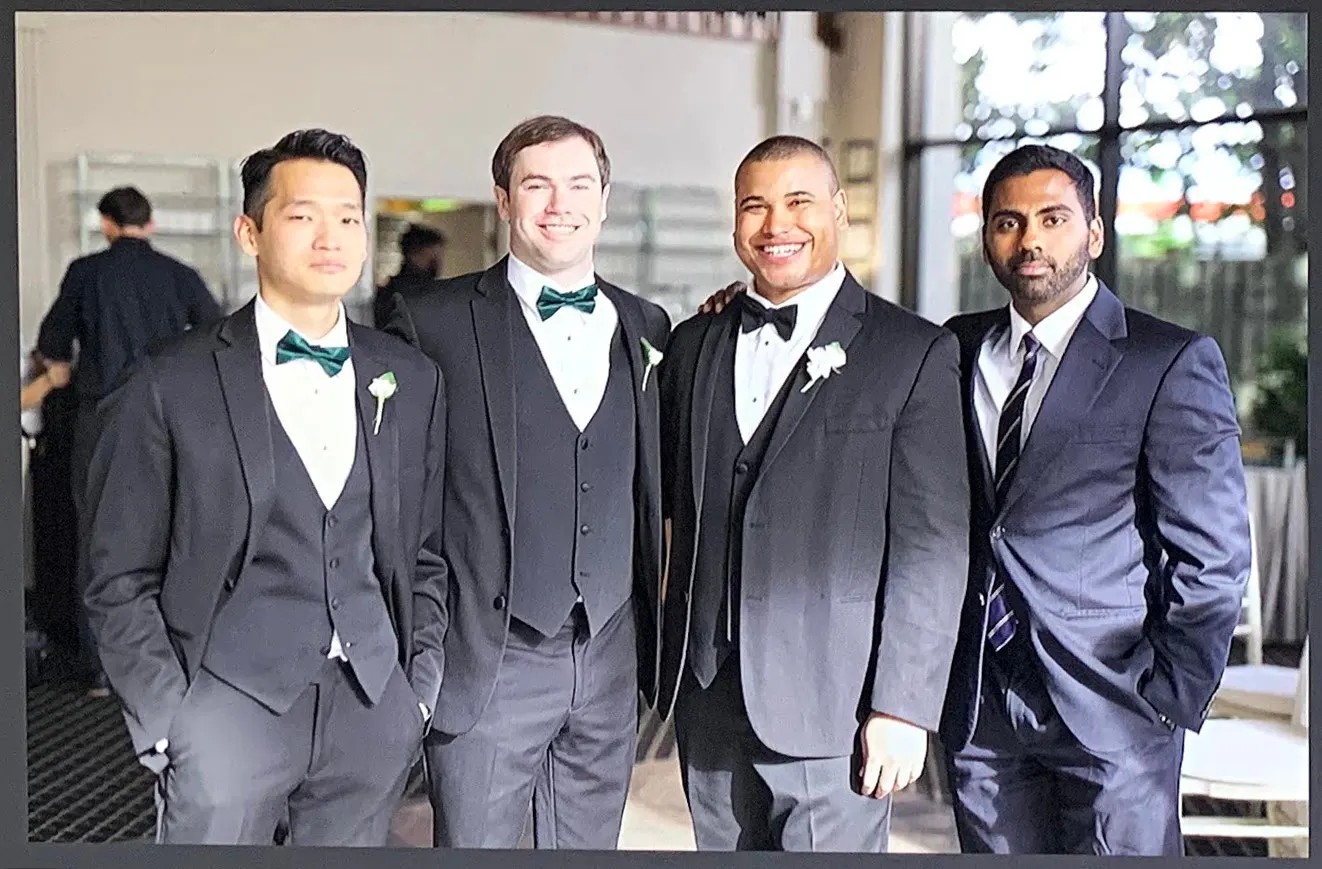
These days, I feel fucking old. I spend time in my memories and feel in my bones how much time has gone by. Passing days only add to building pressures in the mind. Shames from the actions of a younger self sitting unresolved.
I miss my friends.
I miss my family.
I miss my Friend.
None of you are getting the painting of their own day. These are not souvenirs. As a man does not need to be handed back a day he already owns. He should be proudly remembered for standing up at somebody else's.
So that is what these are. Not a record of three weddings, but a record of the four of us. On days when we showed up for one another. A thread of connection to remind us of what we've had all along.
After the Ceremony
Oil on a gypsum, gesso and modeling paste ground over primed canvas. 24 × 36 in. 2026.
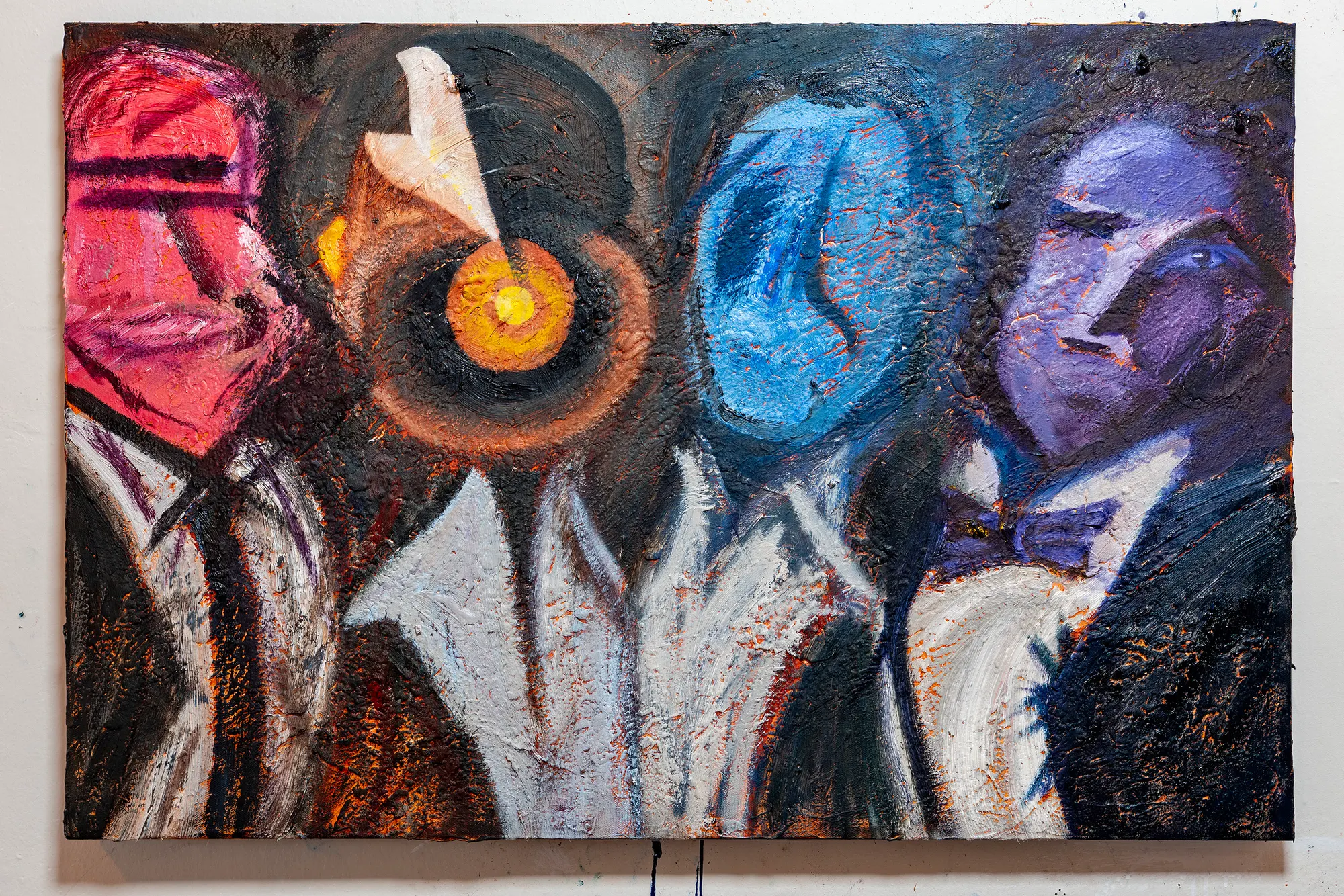
Stand close. Closer than you would with other people in the room.
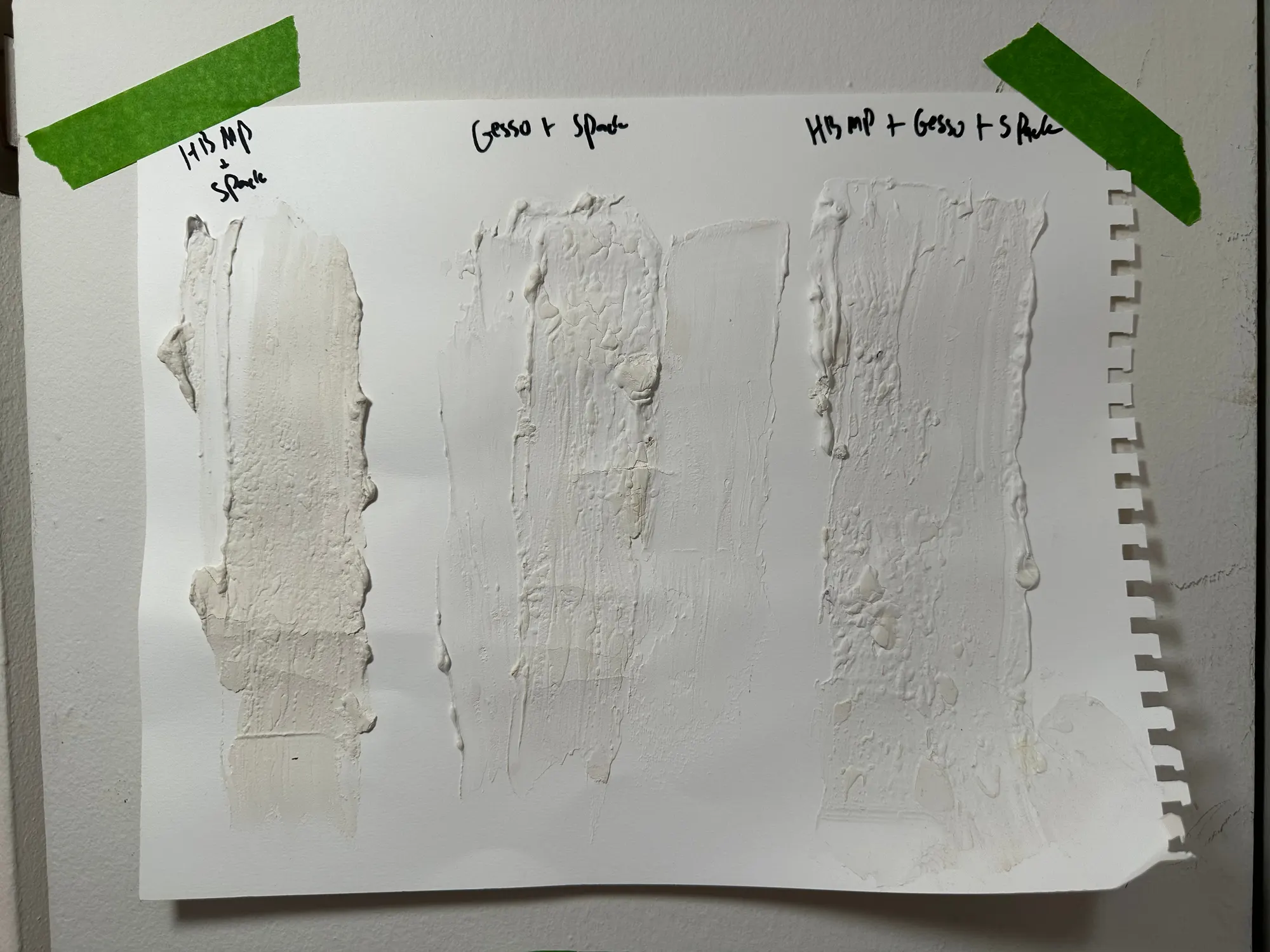
A surface was built before any paint went on it. Gypsum for body, gesso and modeling paste for binder, worked over a pre-primed canvas.
Getting that mix right took a few tests. Too little binder and the material cracked as it dried and went brittle under a fingernail. One whole test panel fractured. Too much and the texture flattens out and you have lost the reason for doing it at all. The foundation of this painting is the ratio that survived.
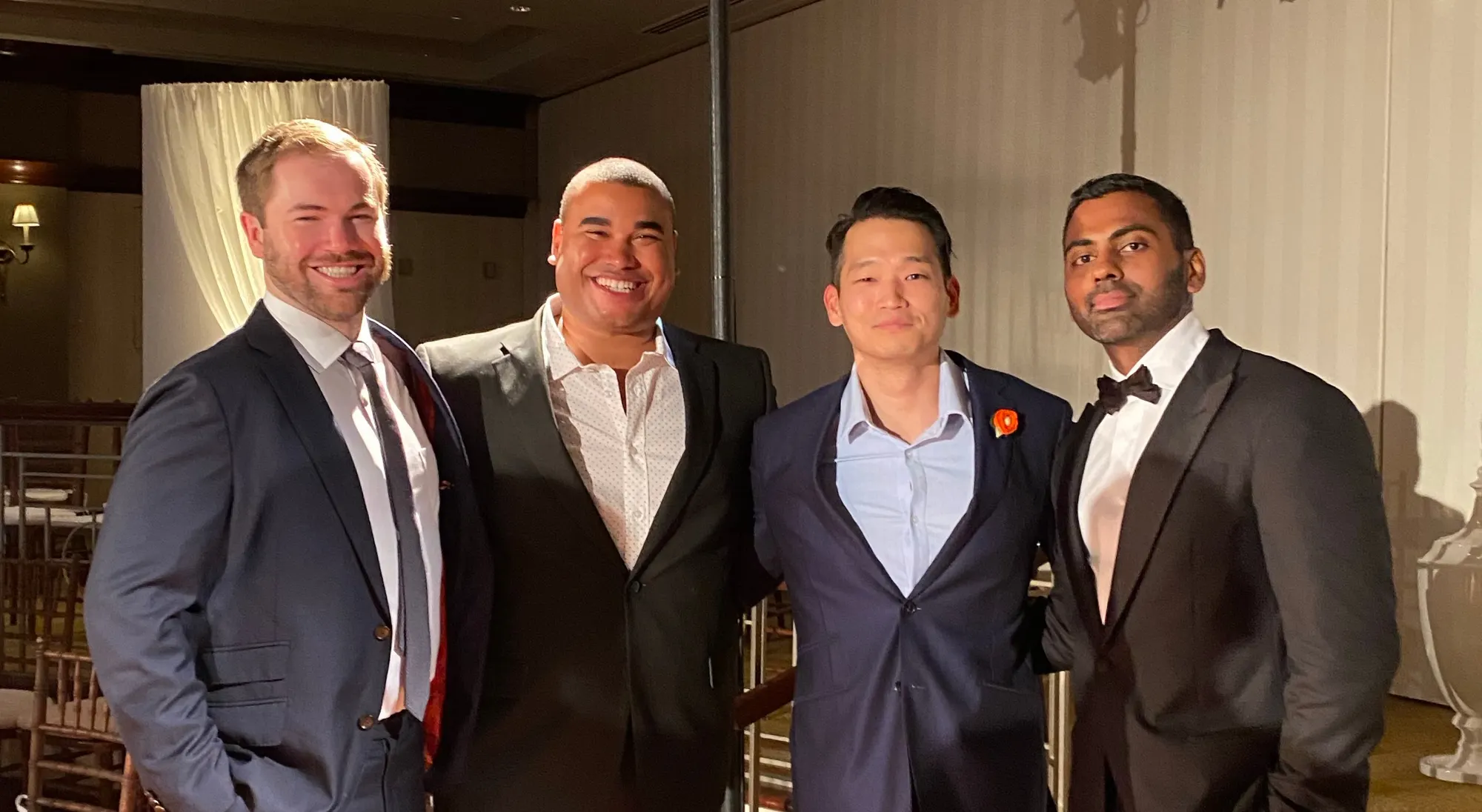
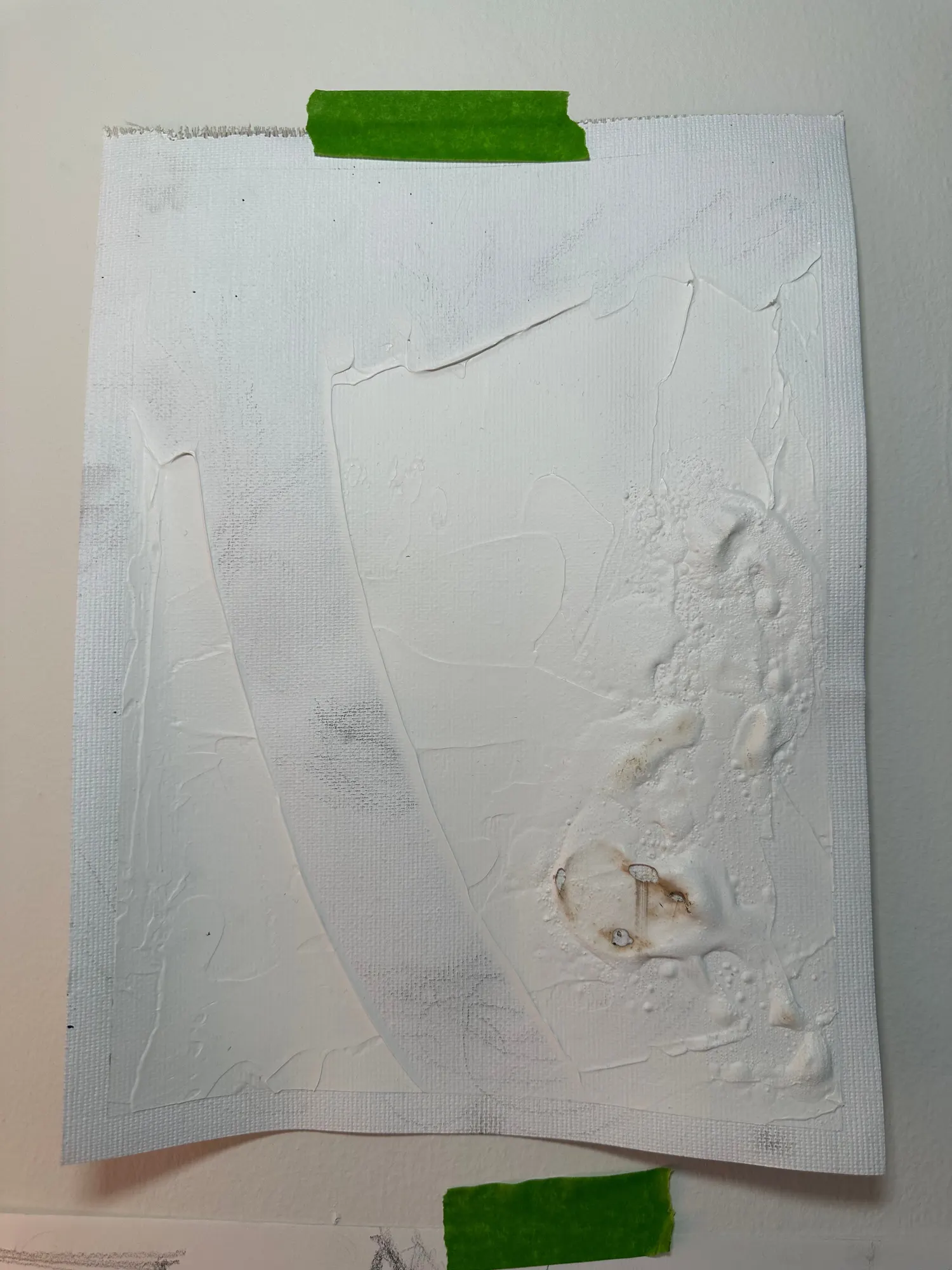
There were other experiments. Different application methods, different drying times. A heat gun to force the drying. One patch I set on fire. It blistered and blackened. The fumes adding to a cumulative toxic exposure which I'm becoming all too familiar with these days.
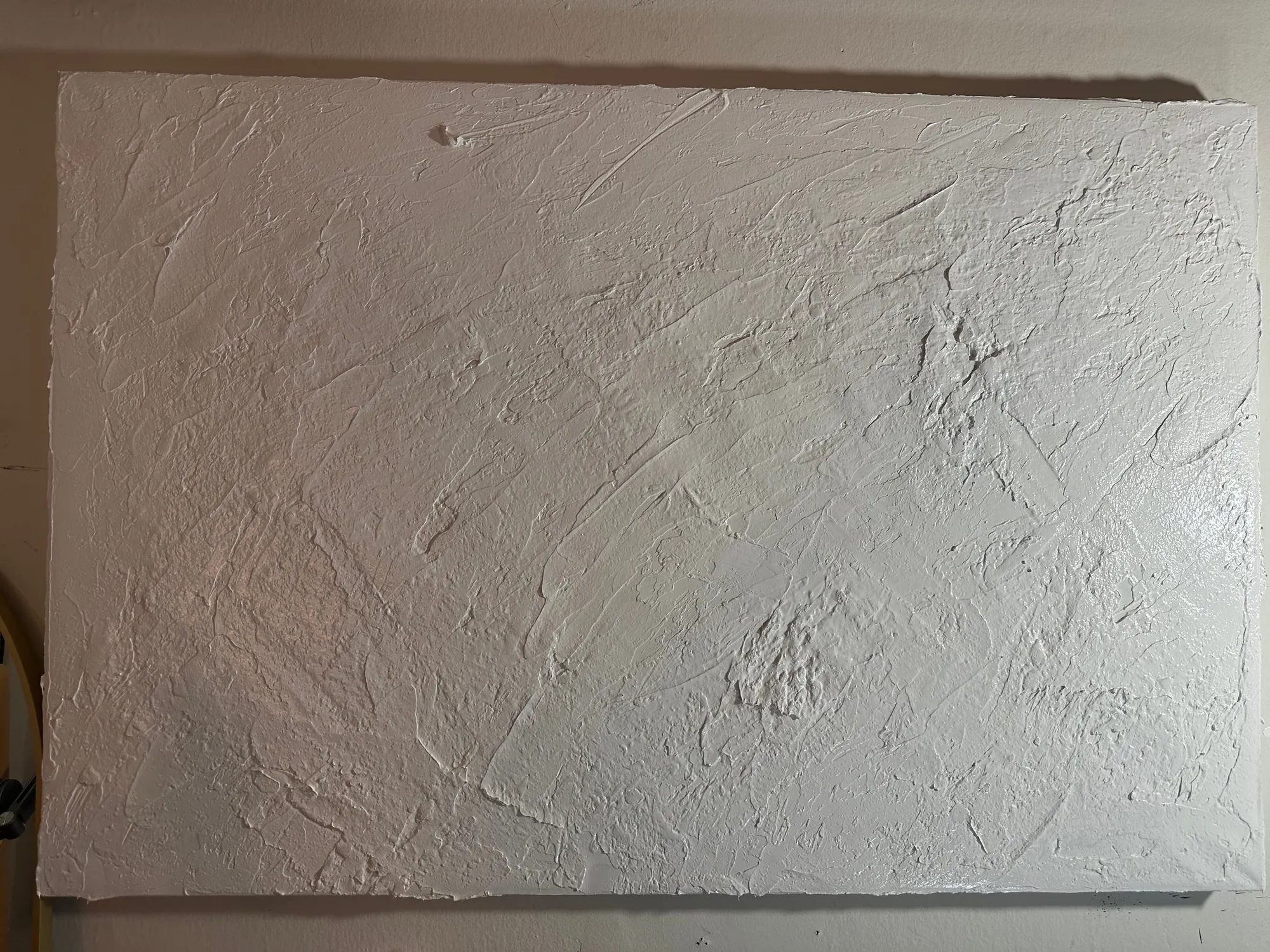
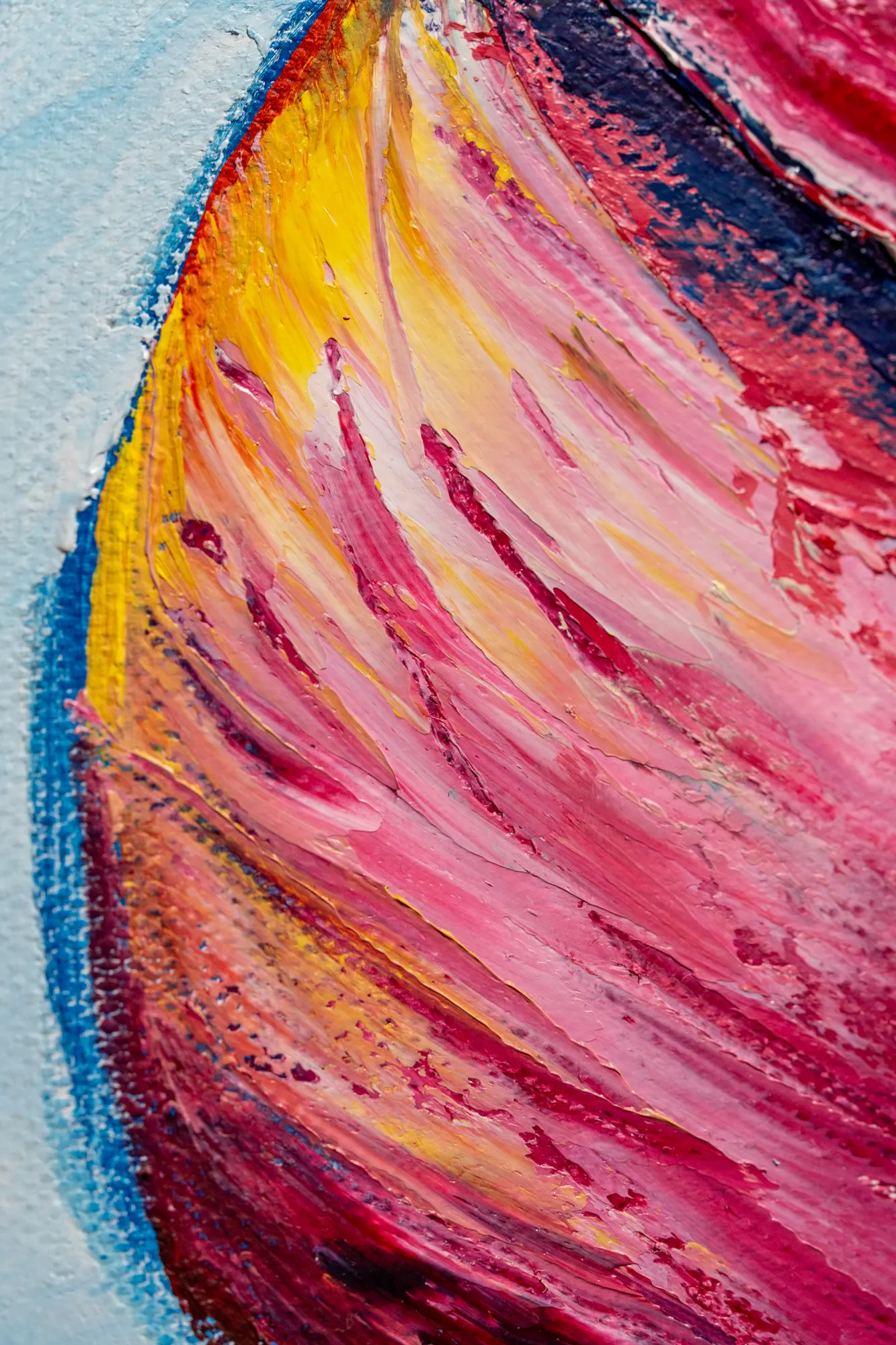
Then the paints went on top, thick.
Now find the orange.
A burnt sienna layer went down first and everything after it was laid over the top, and where the upper paint cracked and pulled and left gaps, the orange comes back up through them. It is not painted on. It is what is left where the surface fissured. Opening between ridges. Caught in the spaces the brush could never reach.
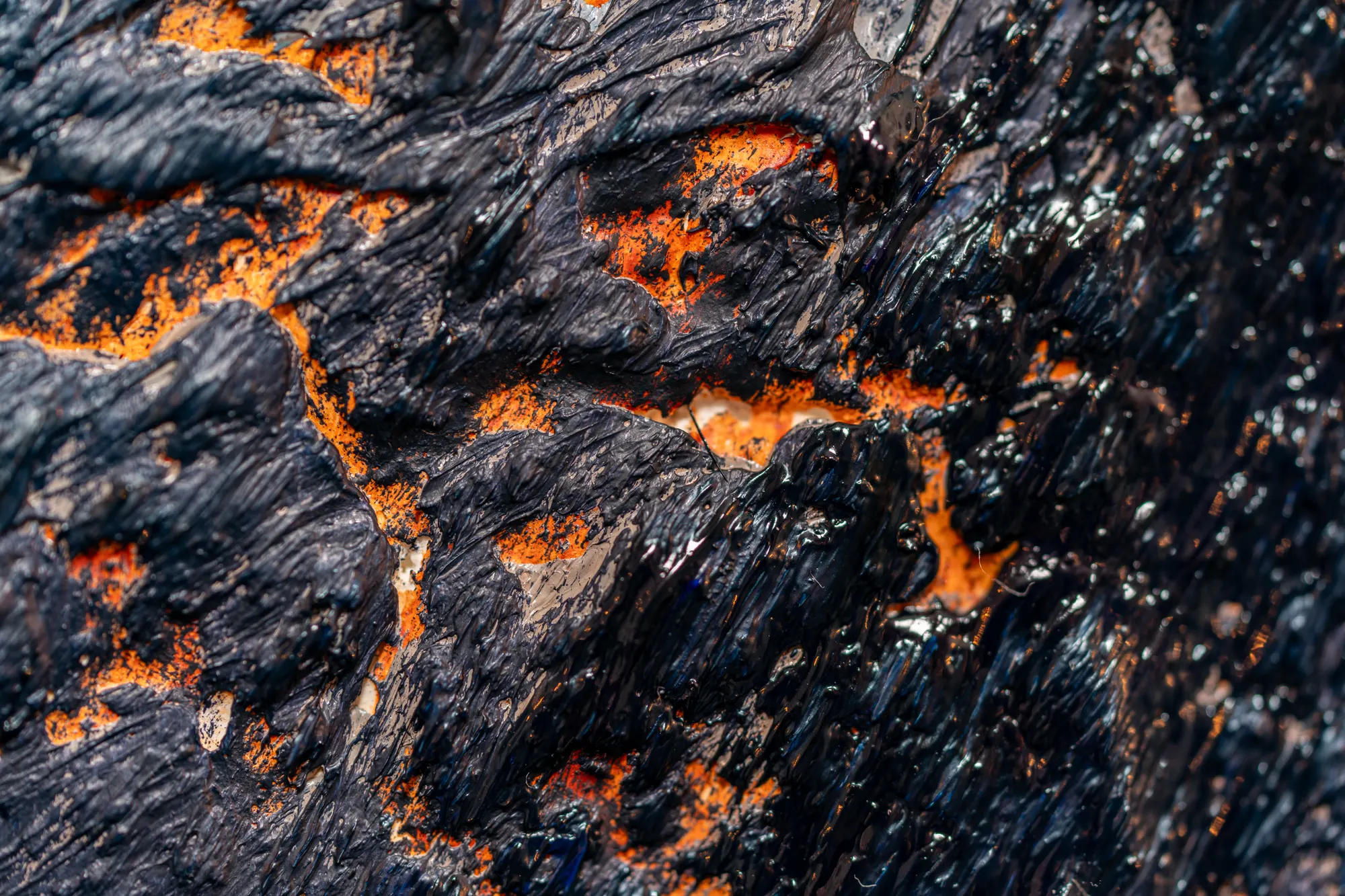
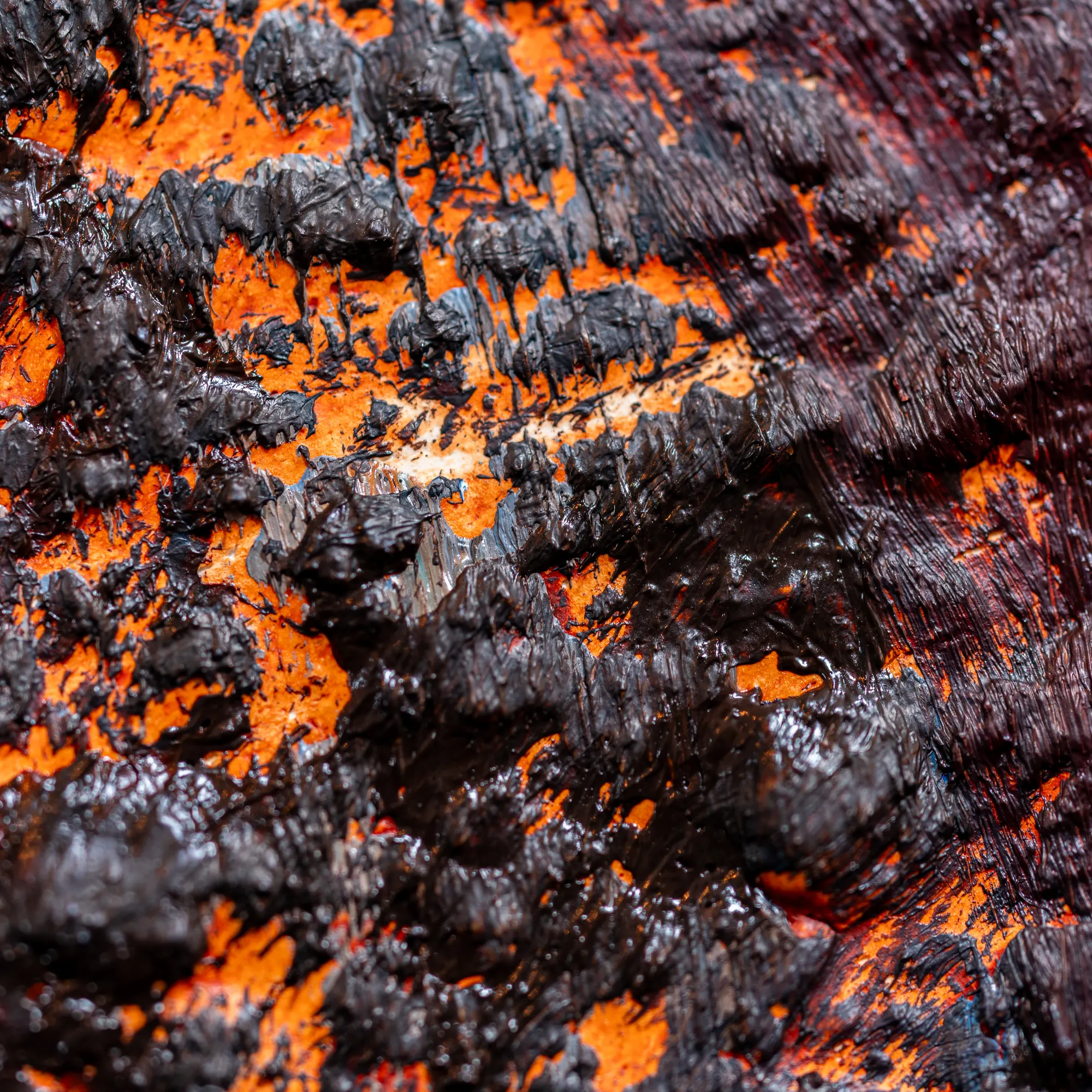
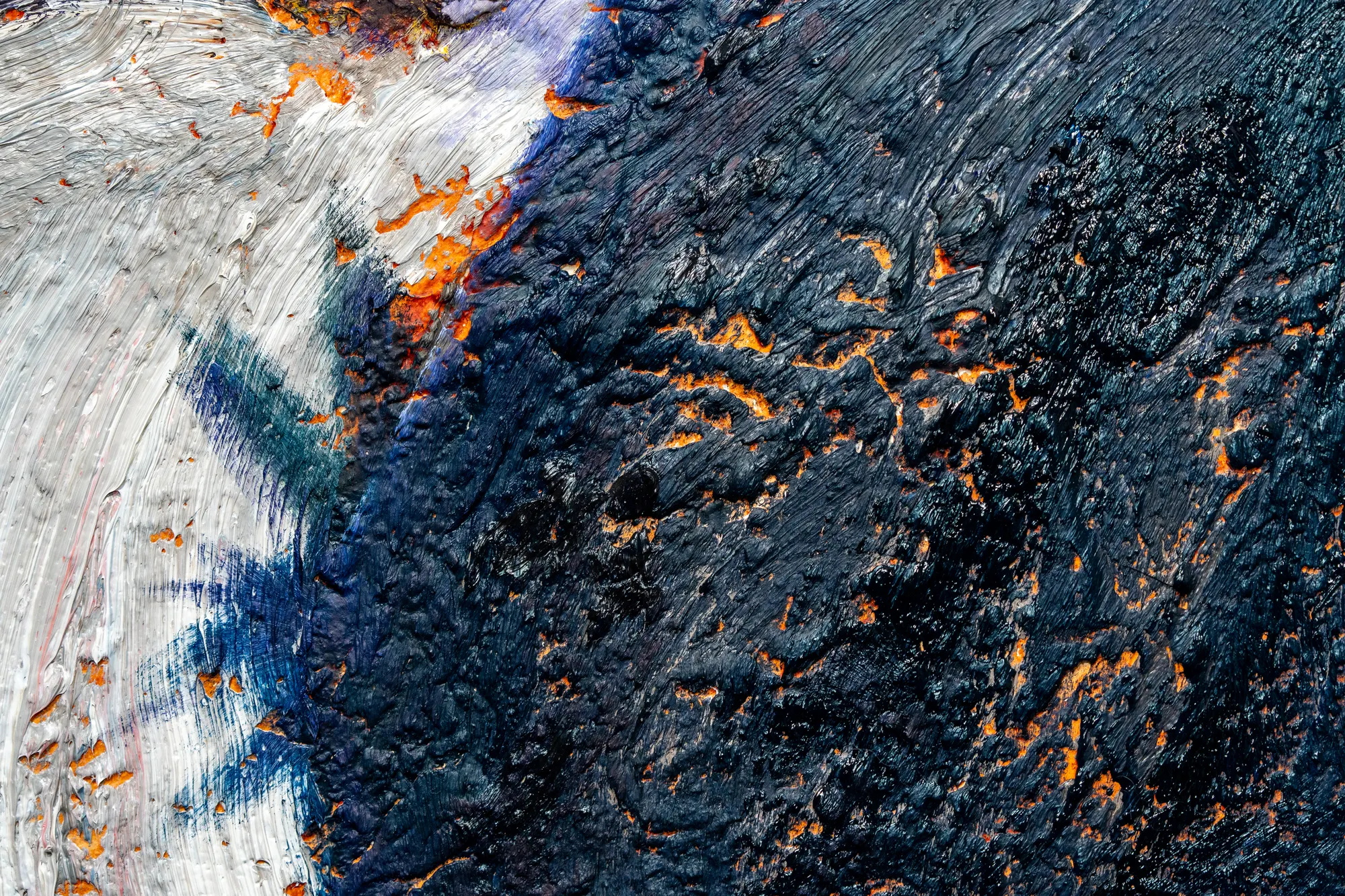
Step back and the ridges resolve.
Four figures. White shirts, dark formalwear. A pink mask crossed by dark bands. An orange figure glowing with an internal light, with a section removed to show the brilliance within. A blue mask with no discernible facial features, dense with emotion. A violet figure turned to profile, its features cut in rather than painted on.
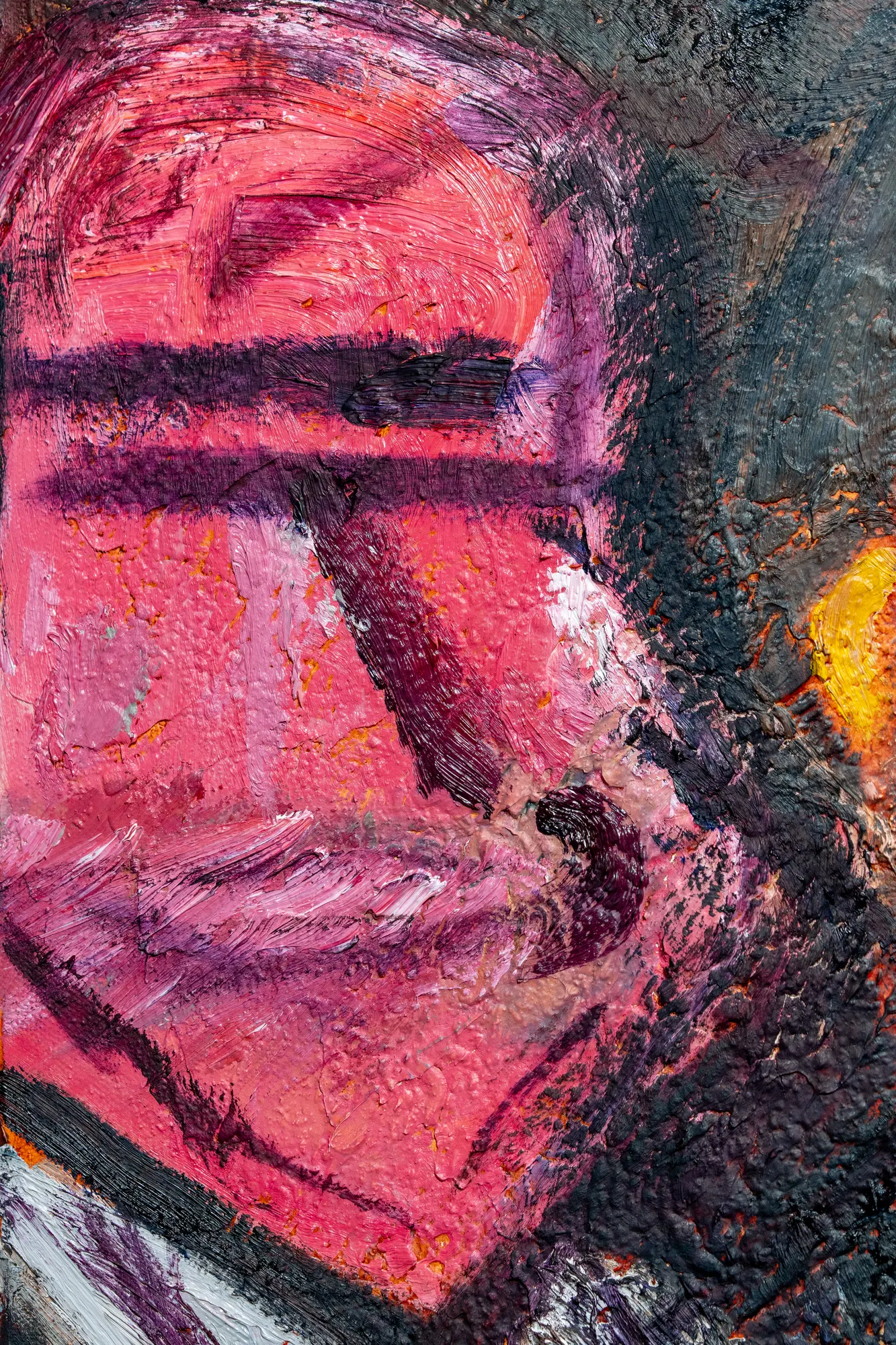
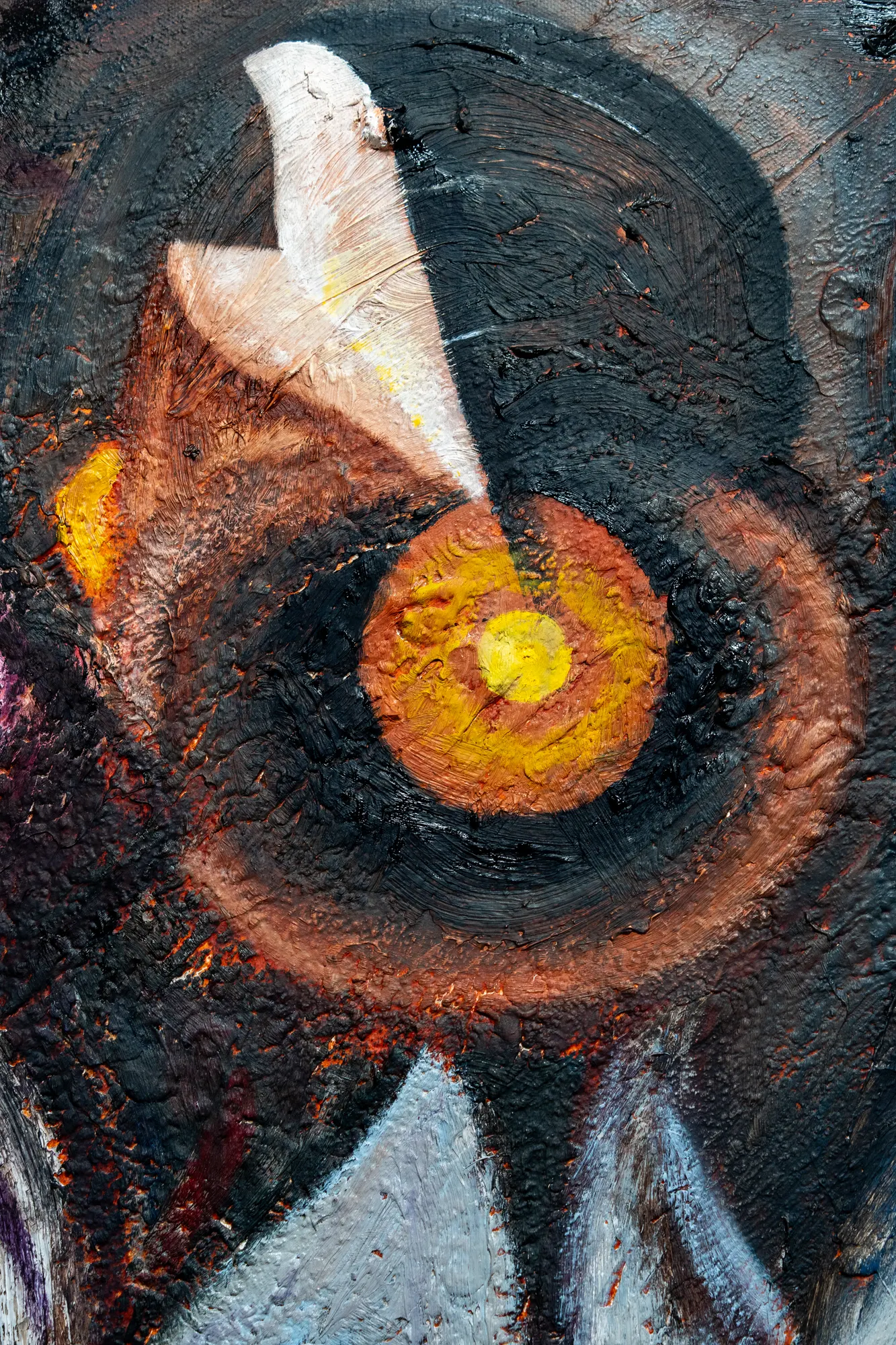
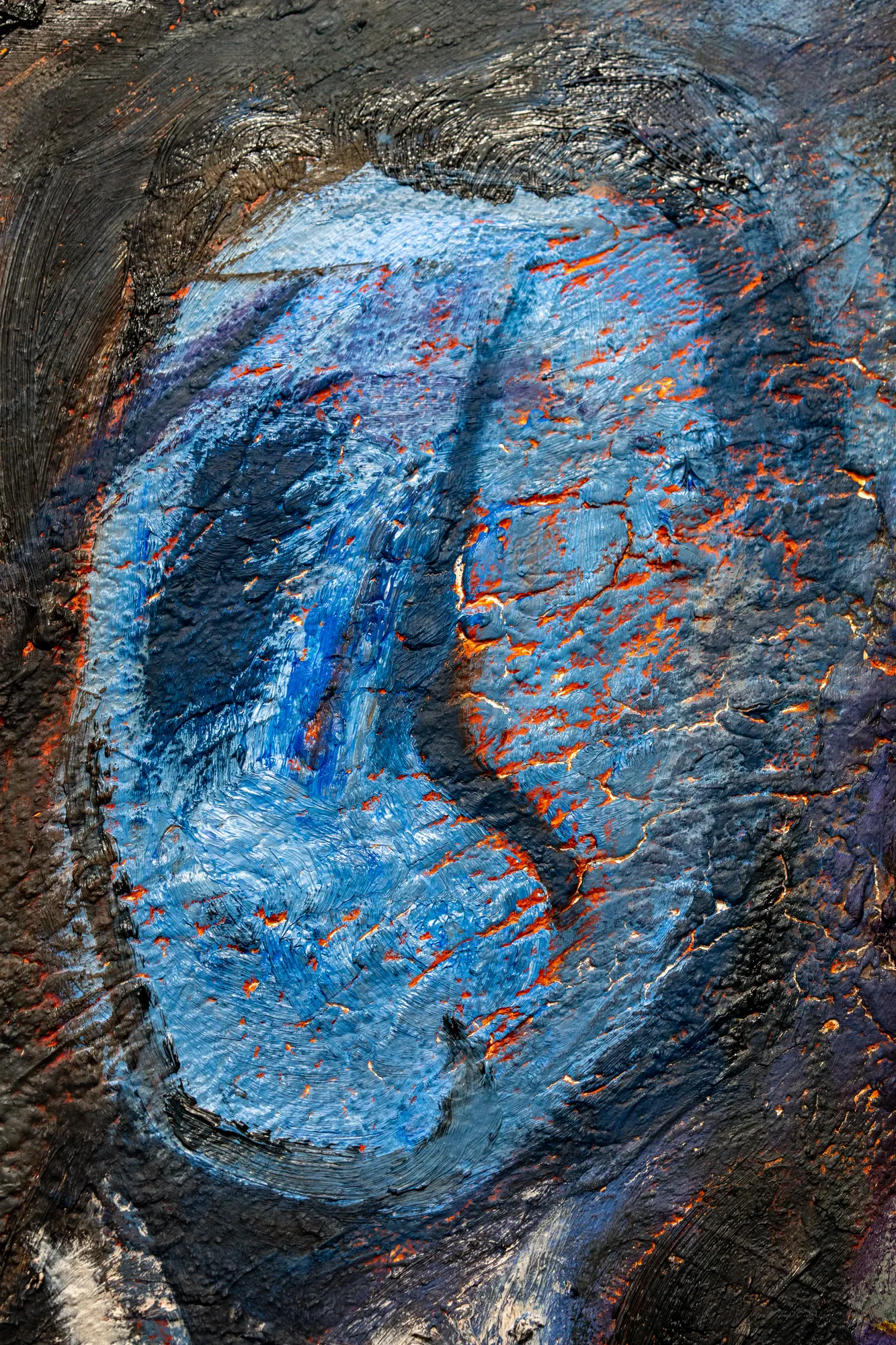
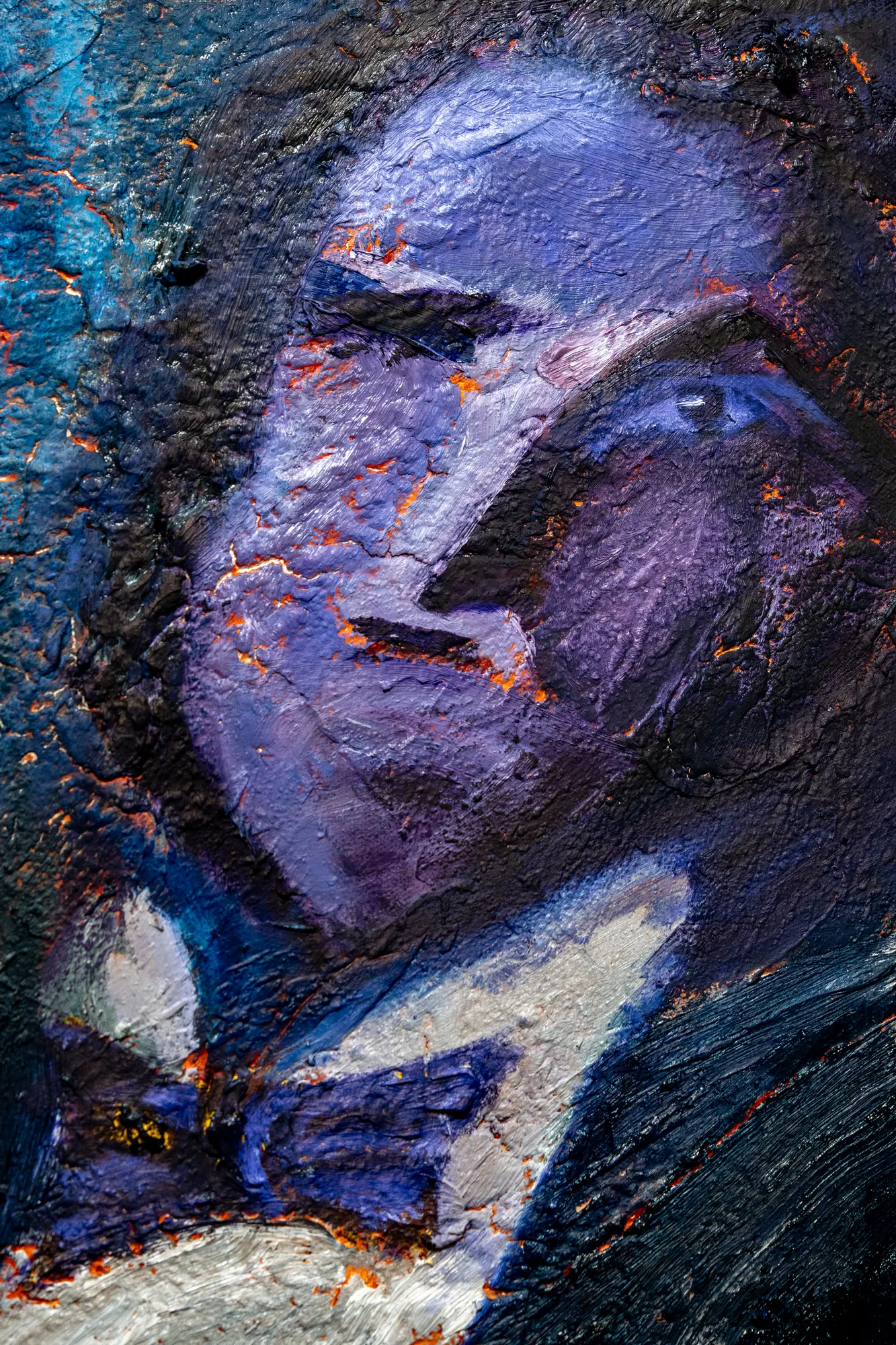
Two of them are dense and sit forward. Two are dissolving into what is behind them.
I gift After the Ceremony to my brother Ryan.
Blue #1
Oil and safflower gel medium on canvas. 24 × 36 in. 2026.
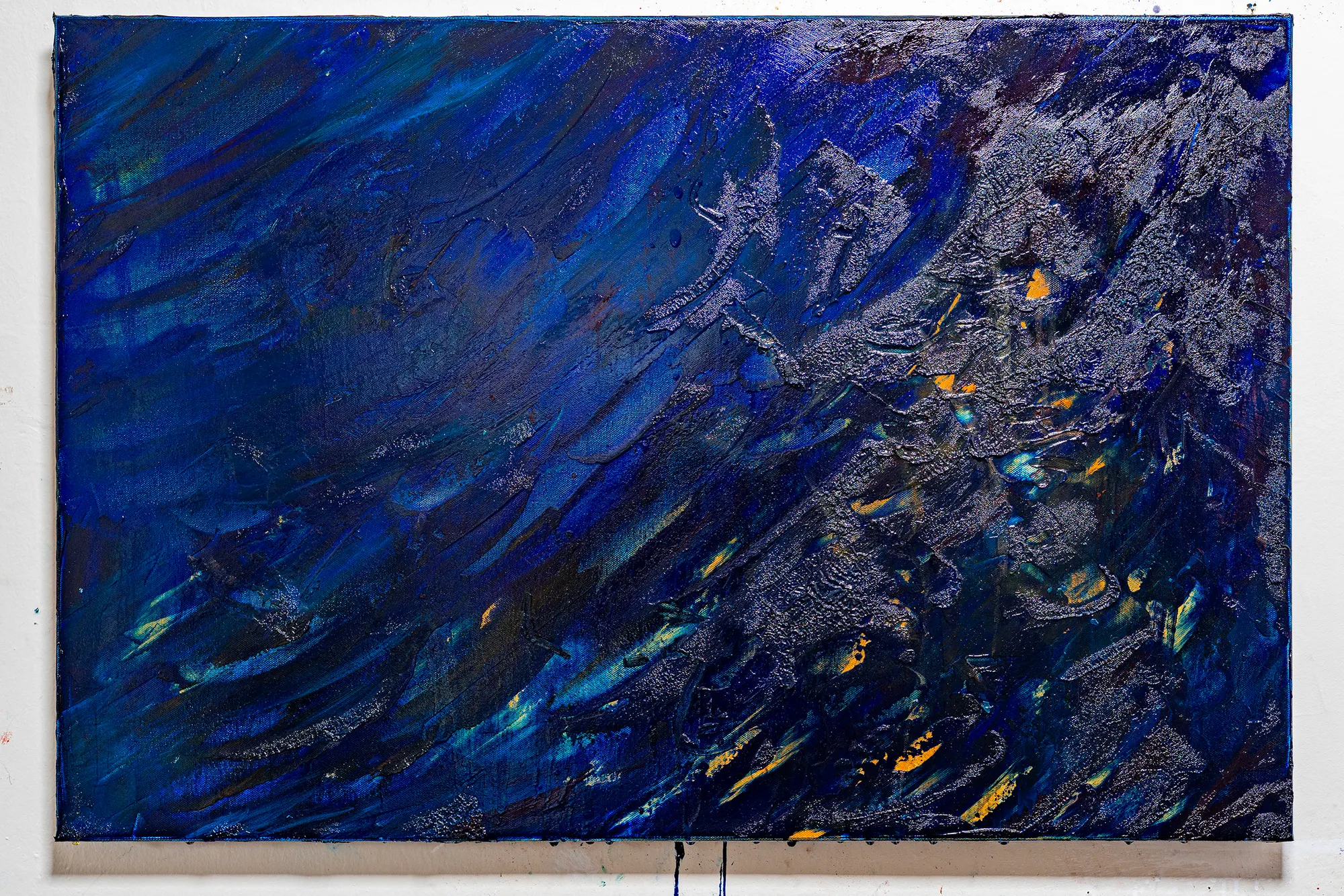
It begins orderly at the top left. Then it ripples out into something different entirely.
That is if you can see it. This one changes depending on where you put it and how it's lit.
On a cloudy afternoon with the lights off it is a dark blue block, near black, with bits of burnt sienna coming up through it. That's nearly all you get. In an ordinarily lit room, some of the layers surface and you begin to see what lies within. Light it deliberately, directly, and the whole thing comes forward at once.
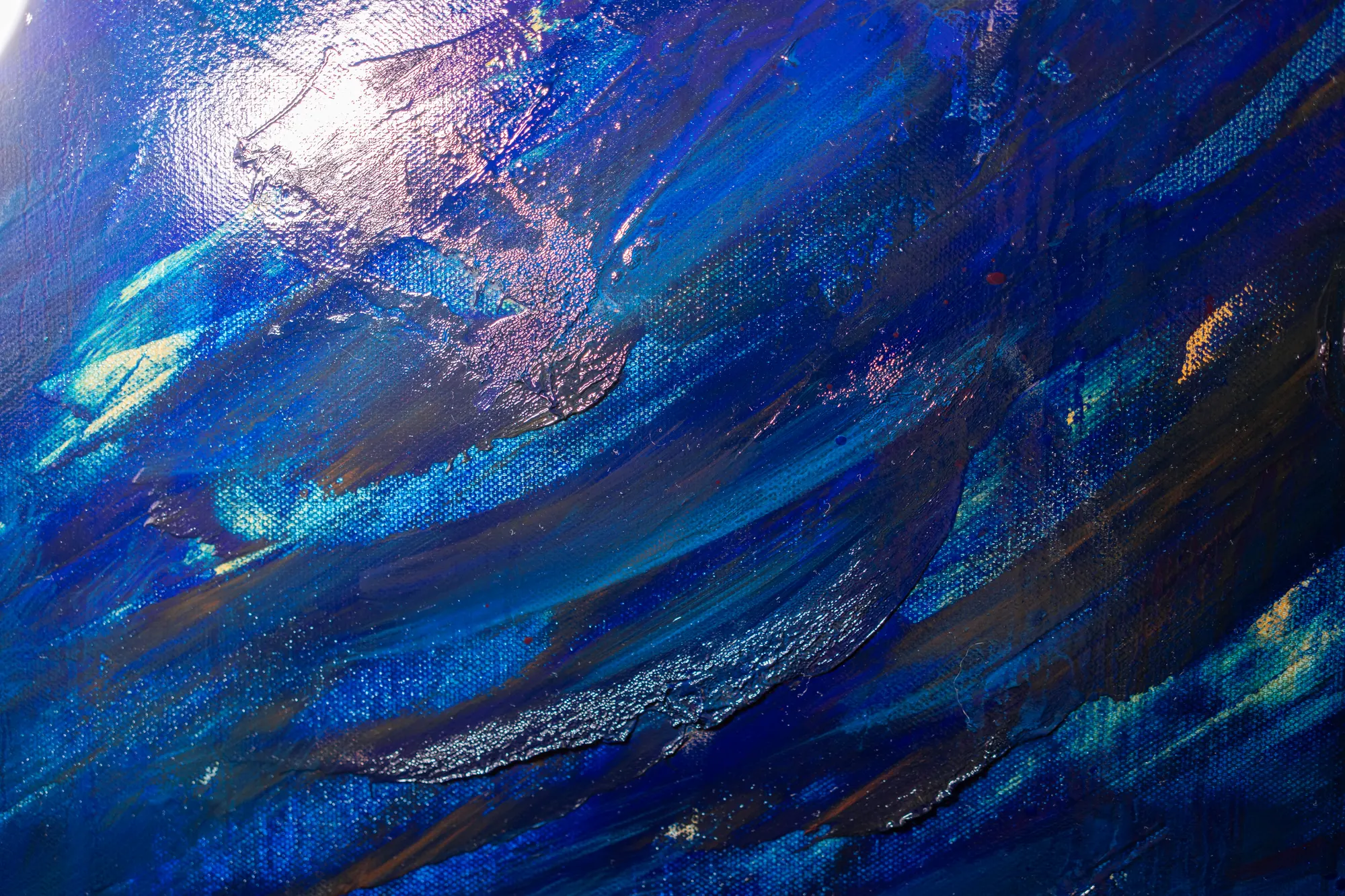
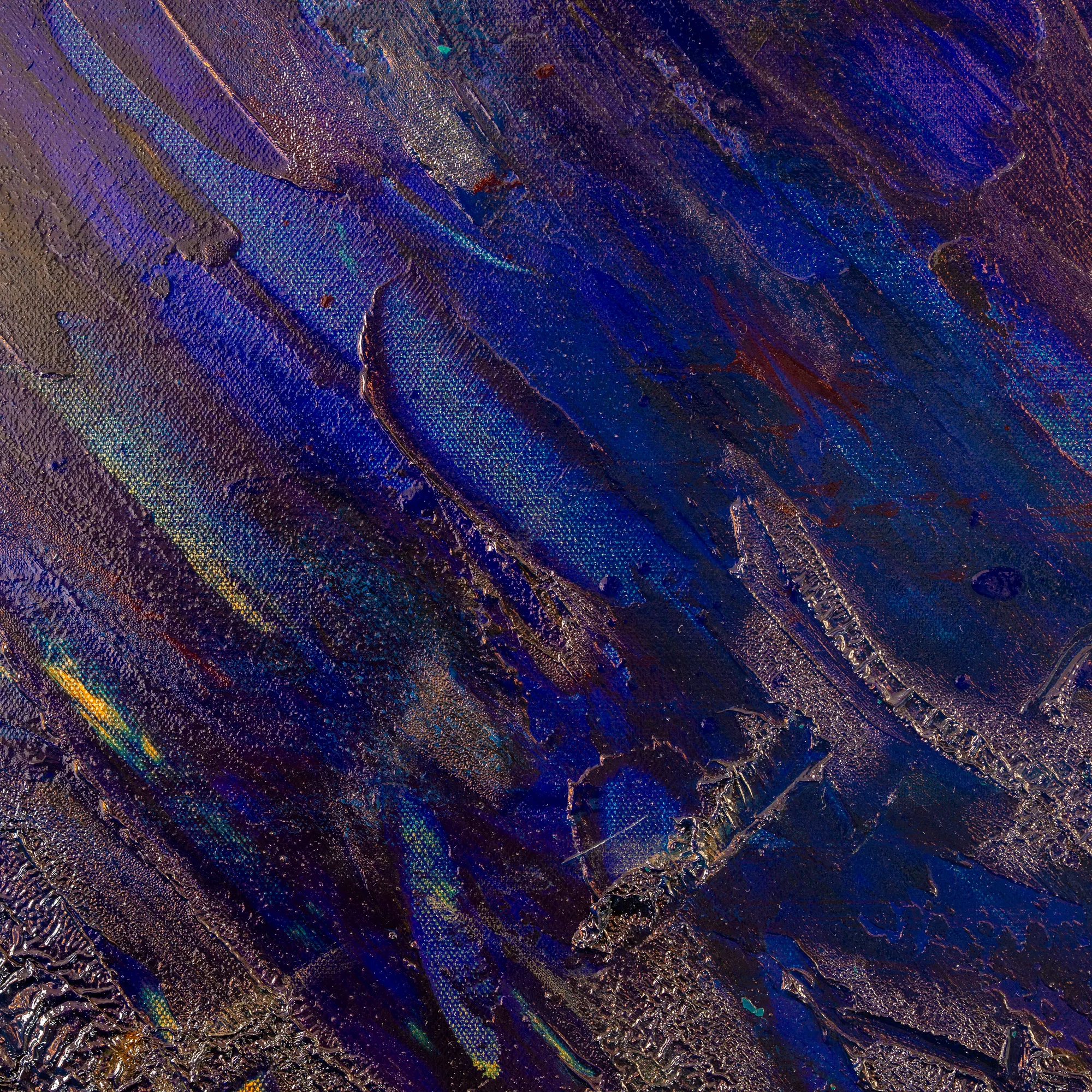
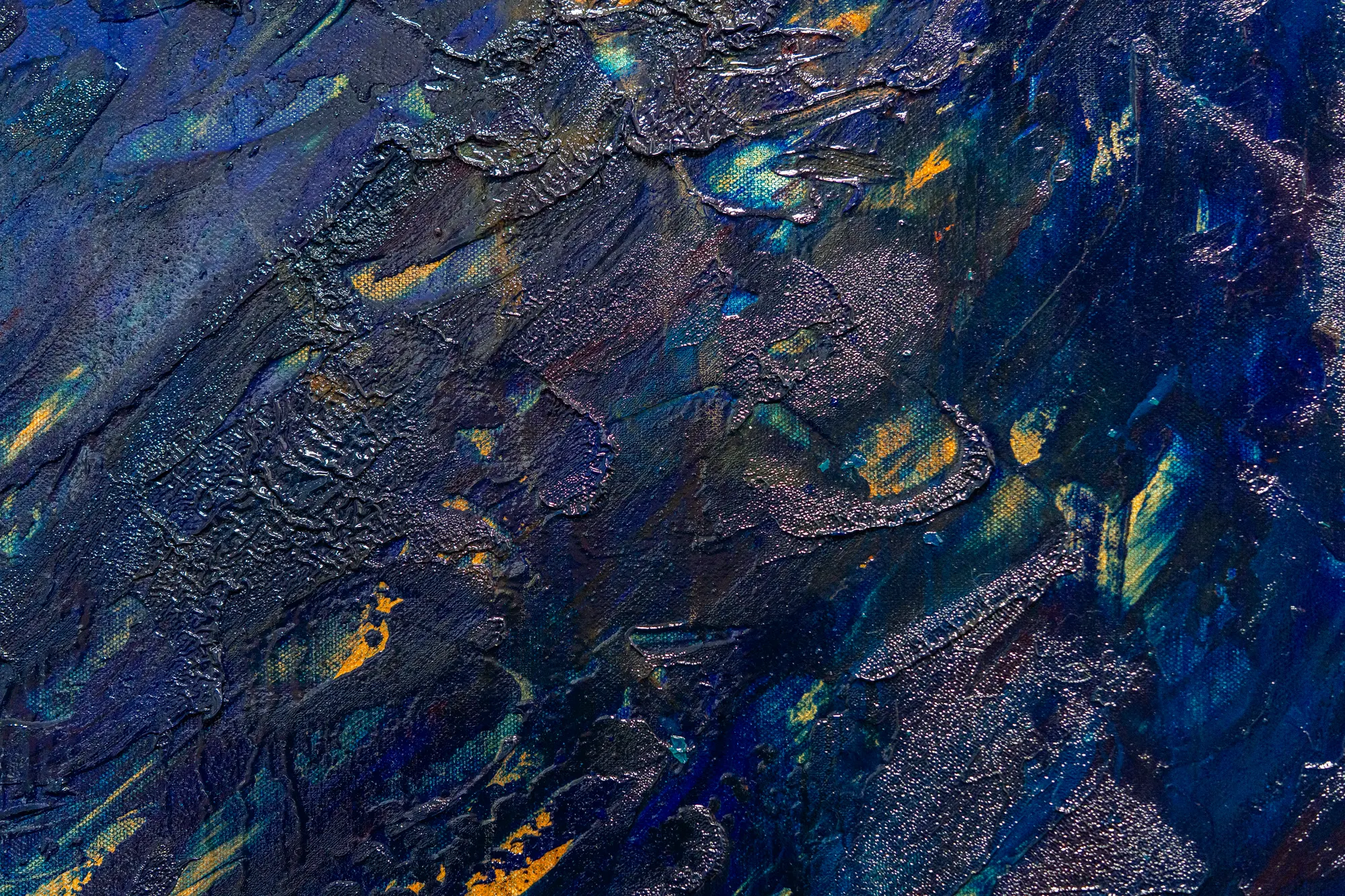
In the act of displaying the piece, you become a contributor to the final artwork. A painting with an off switch.
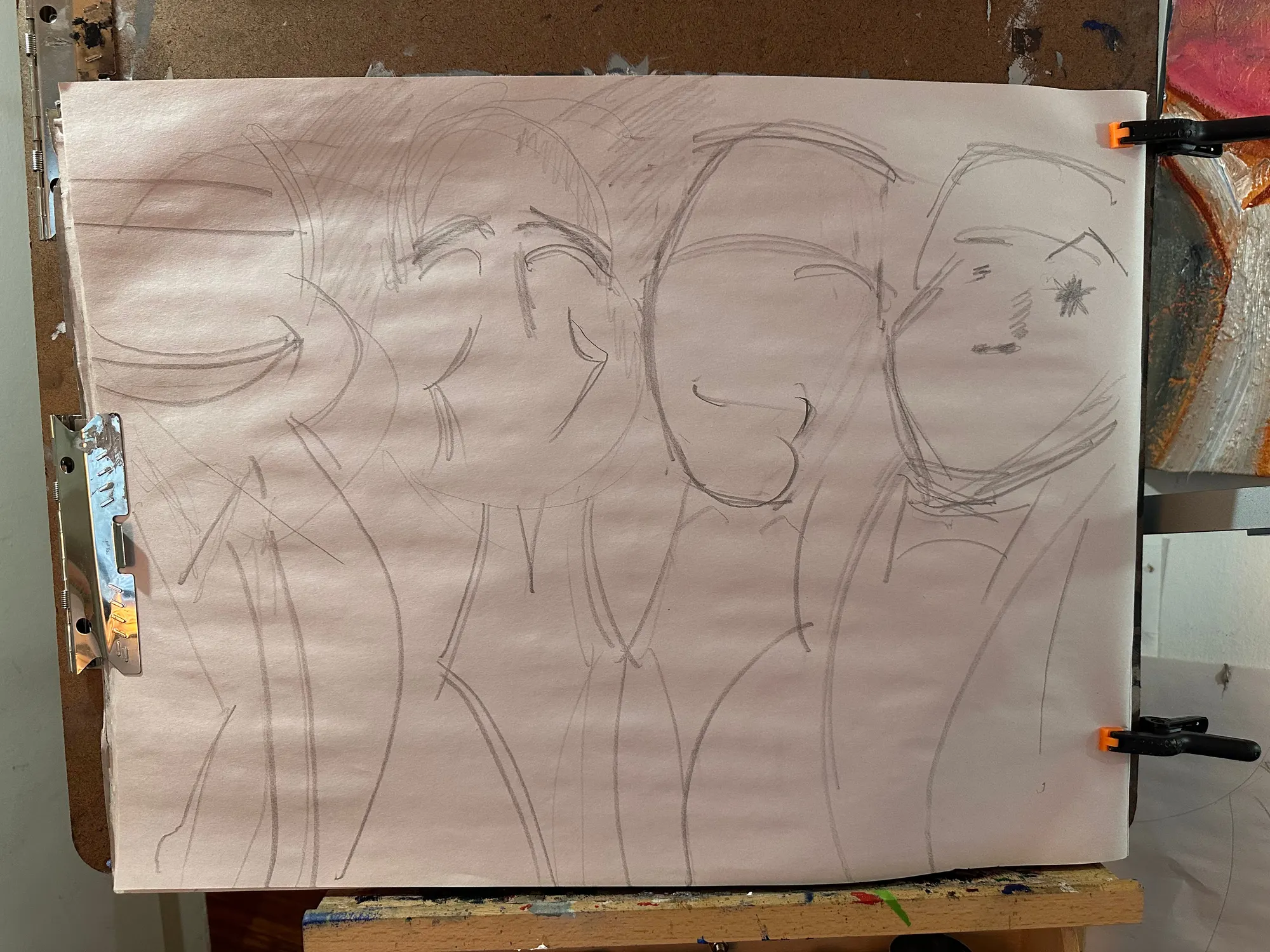
It started as a wash. Oil thinned down with paint thinner and pushed around until the canvas was a fog of color. While that was still wet I drew the four of us into it. Caricatures, really. Eyes as arcs, four big stupid grins, done fast and only there to work out where everybody should sit.
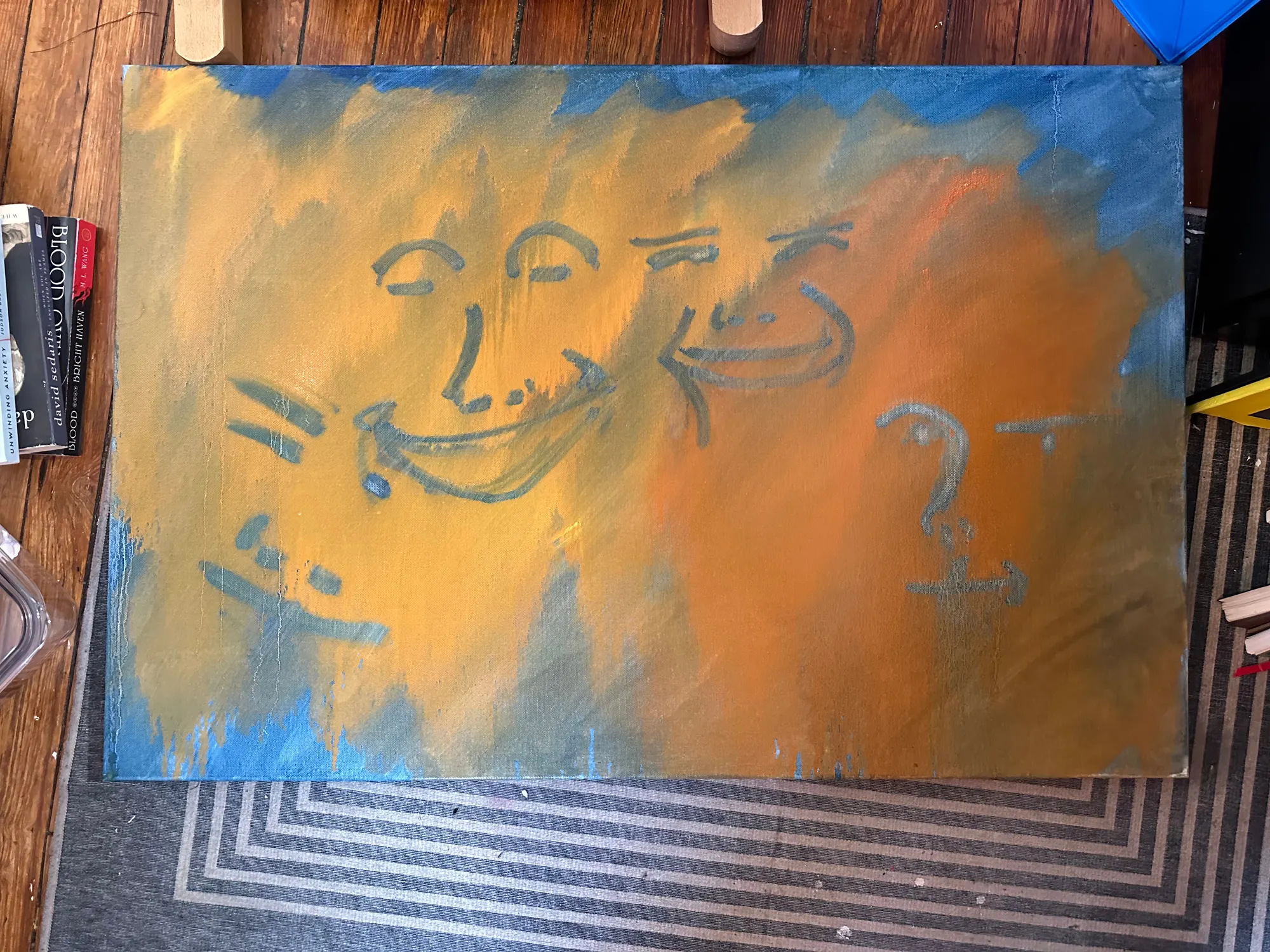
Then I kept building. The paint itself got more interesting to me than the representations. And so I followed the paint. Layer after layer went over those faces until there was nothing of them left to see.
I never took them off. They are still under there.
Safflower gel medium, mixed loosely into the paint. The gel holds the momentum of the brush strokes. Suspending pigments in time.
Twenty paints went into this painting and none of them were pre-mixed on the palette. The work of mixing the paints is left to your eye.
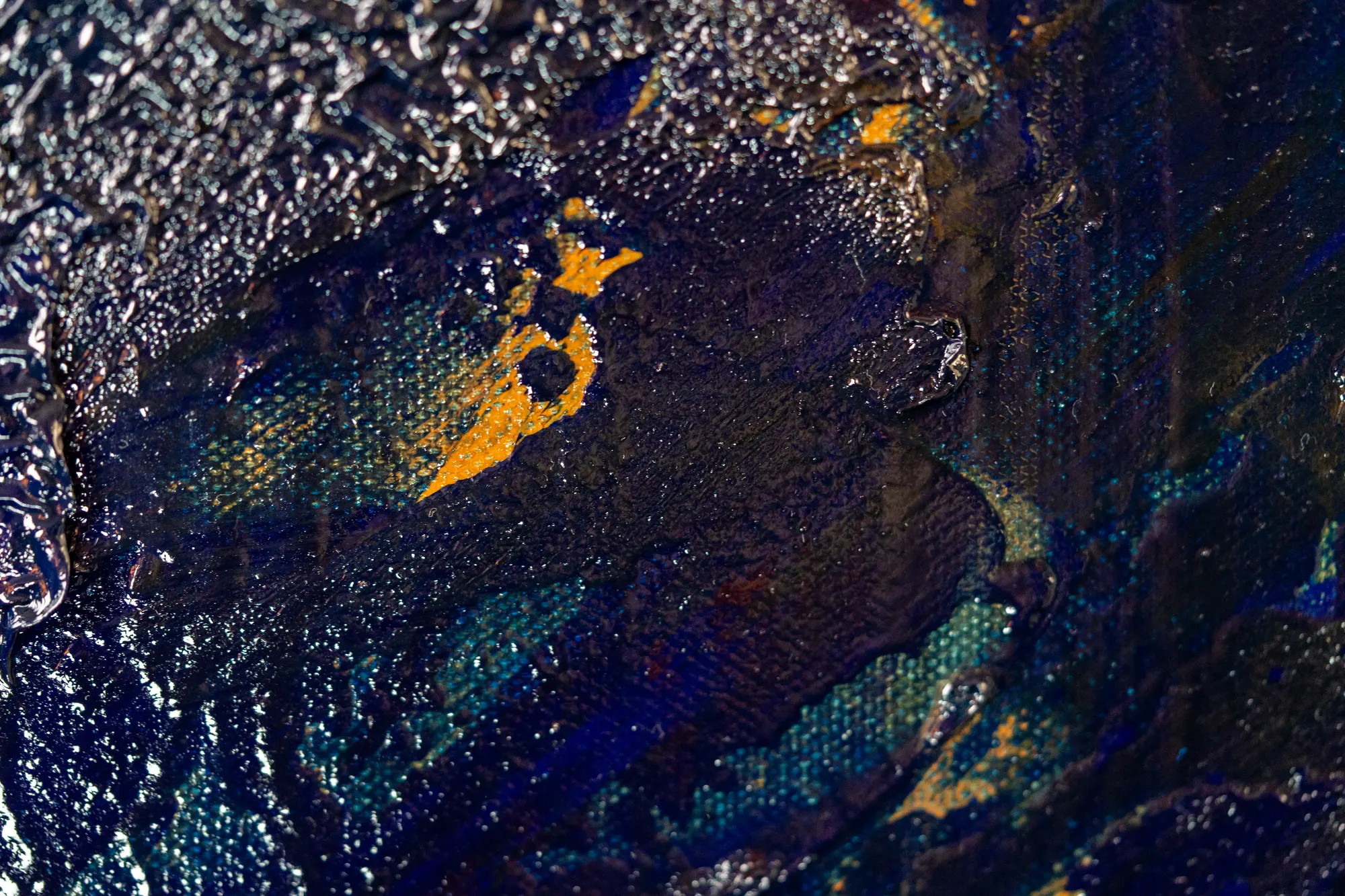
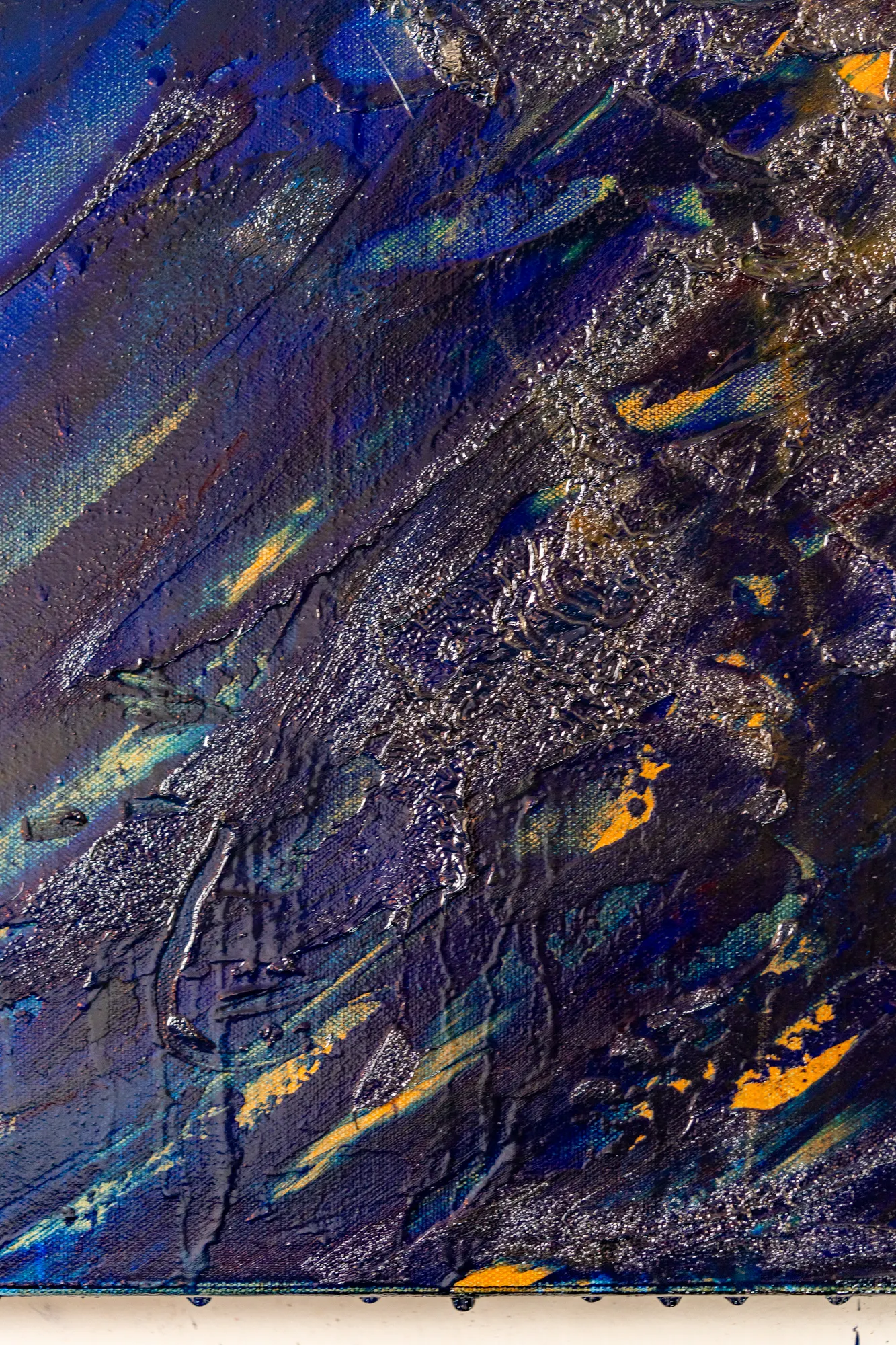
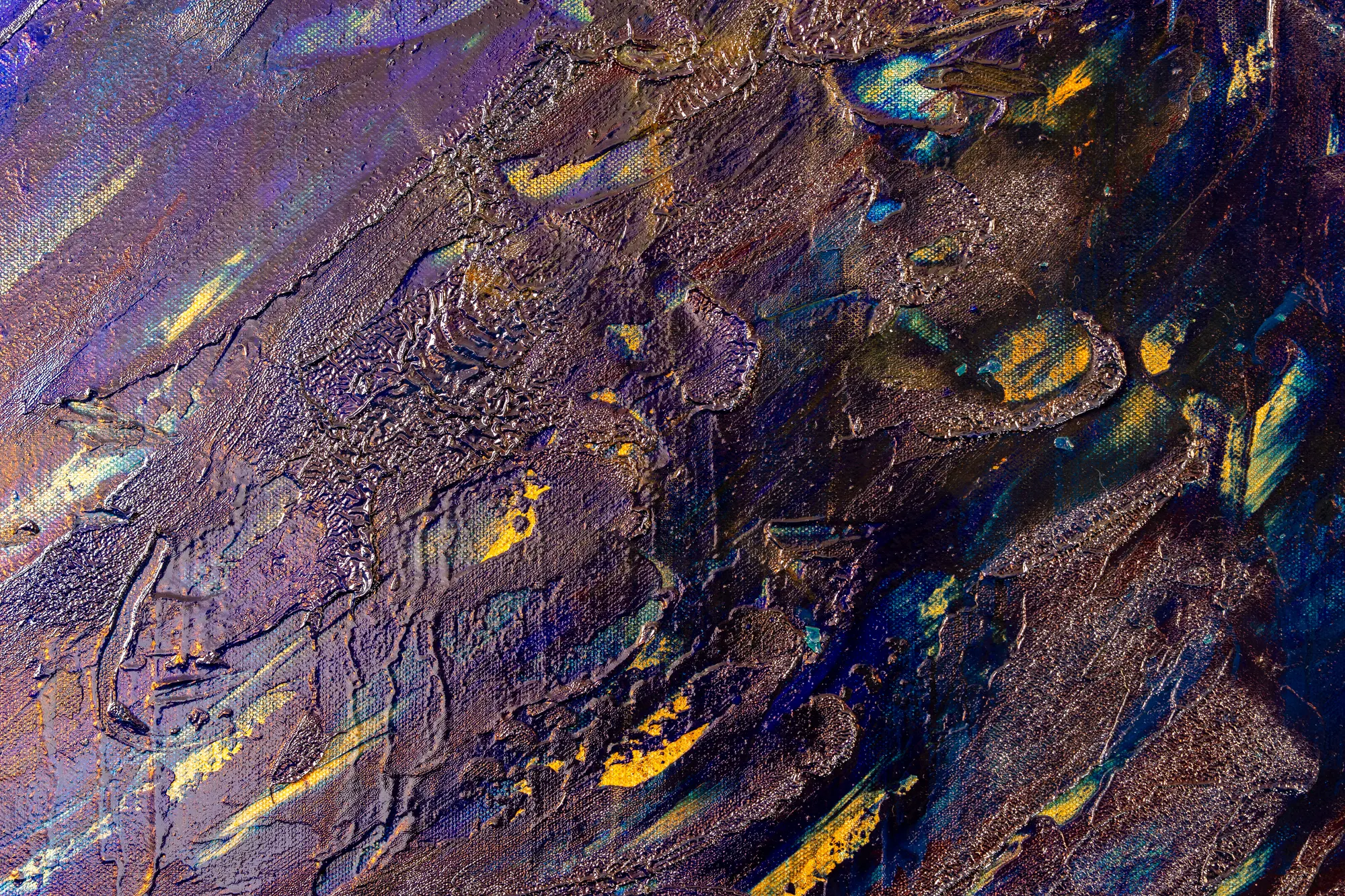
The orange under this one and the orange under After the Ceremony are the same idea. Both paintings are warm underneath and cool on top. Both of them give the warmth back only where the top layer breaks, or where the light drops far enough to let it.
It remains a portrait because we know it to be one.
I gift Blue #1 to Abhi.
Display Room
Oil on canvas. 24 × 36 in. 2026.
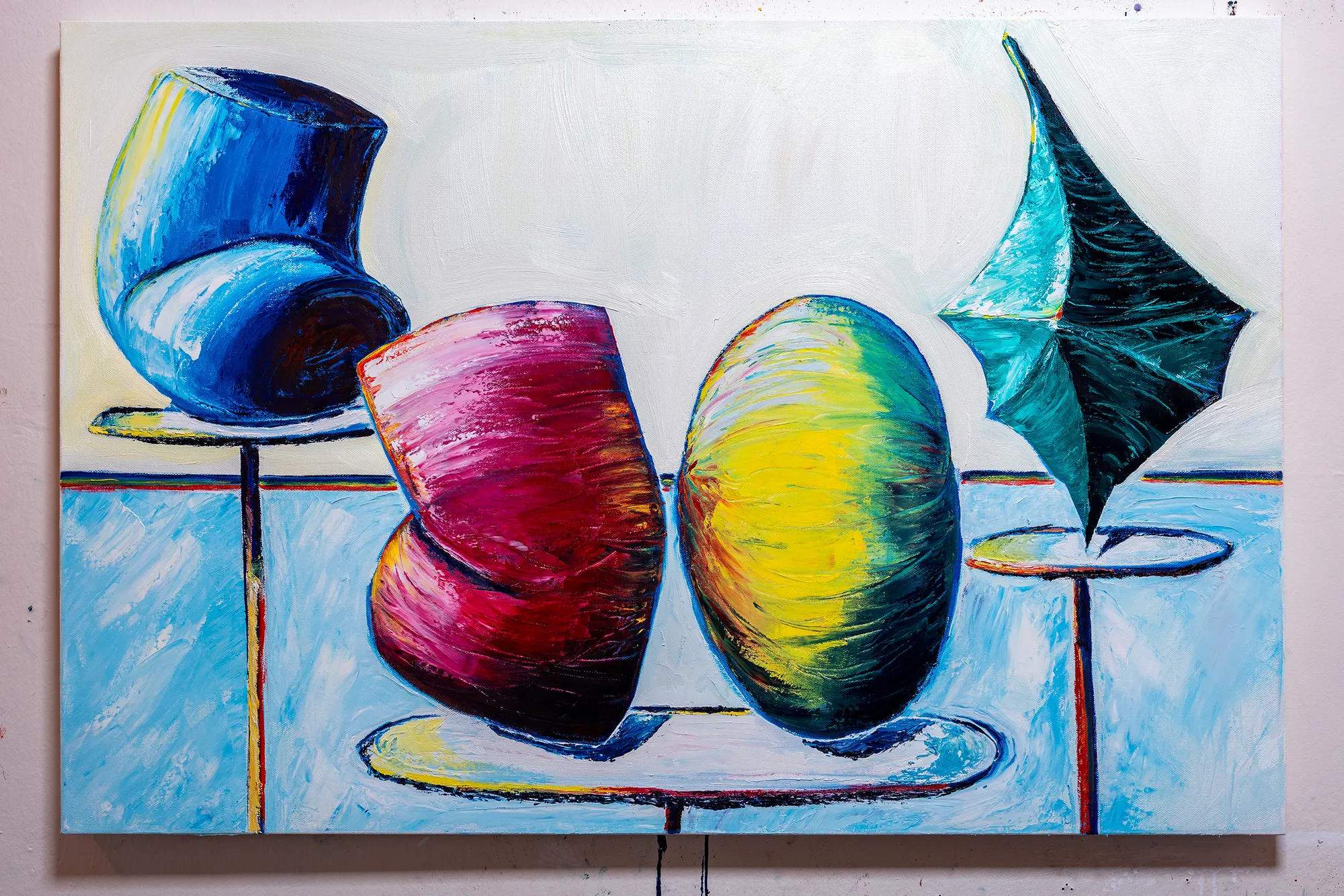
This did not start as shapes. I sketched your faces. Then I drew the sketch again, more abstract than the last one. Then again from that one, and again from that. My emotional feeling of each person nudging each iteration.
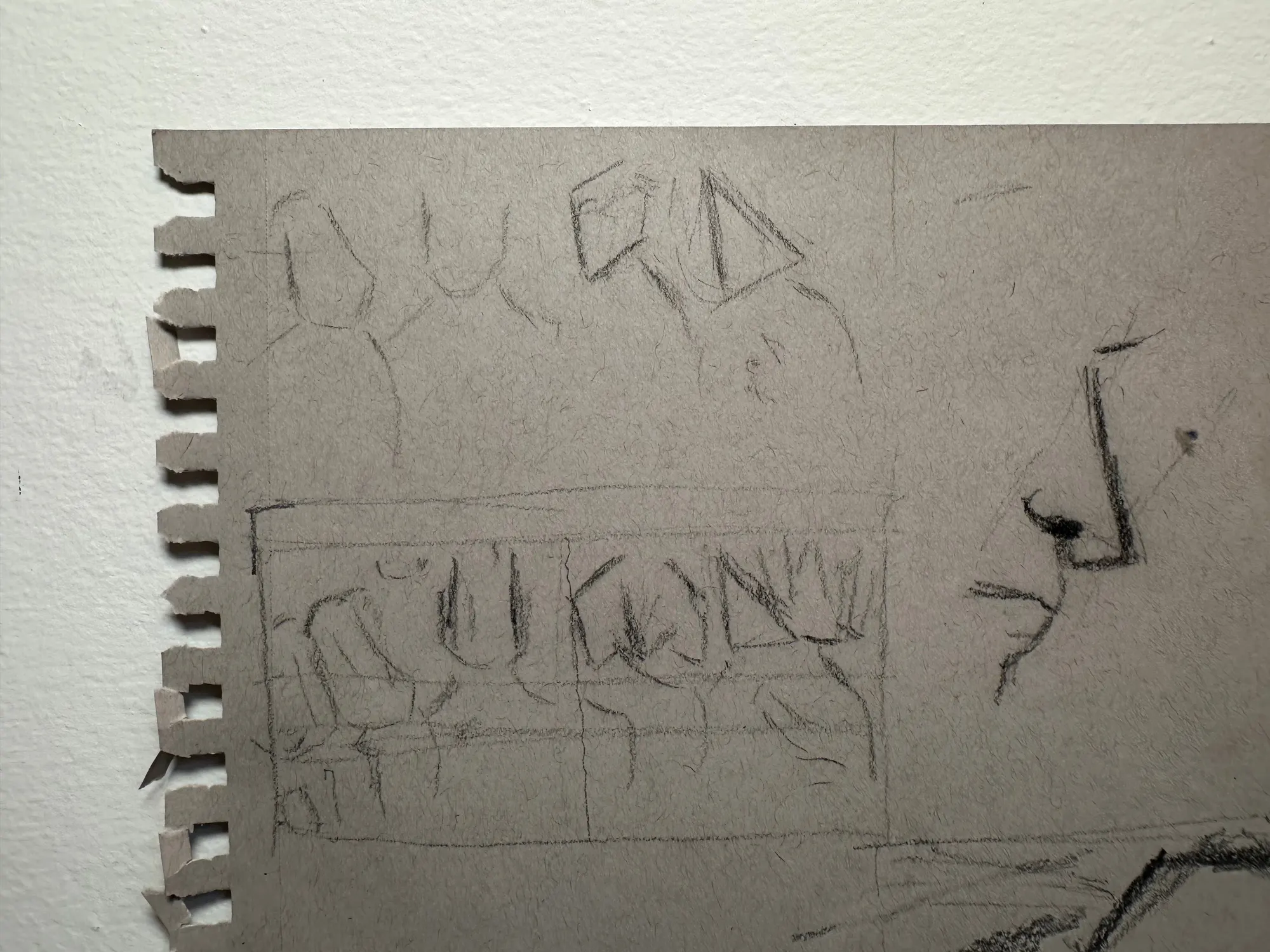
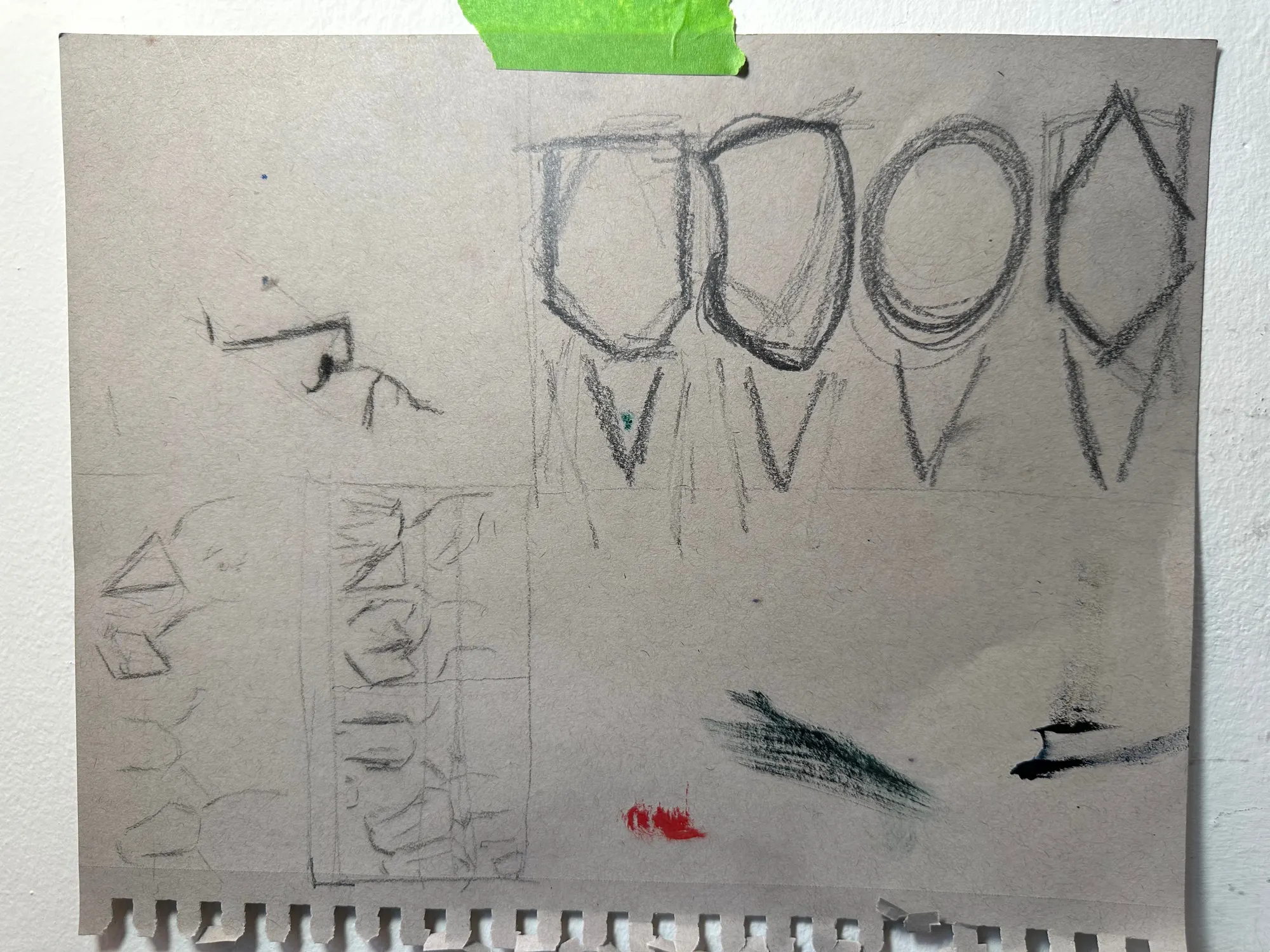
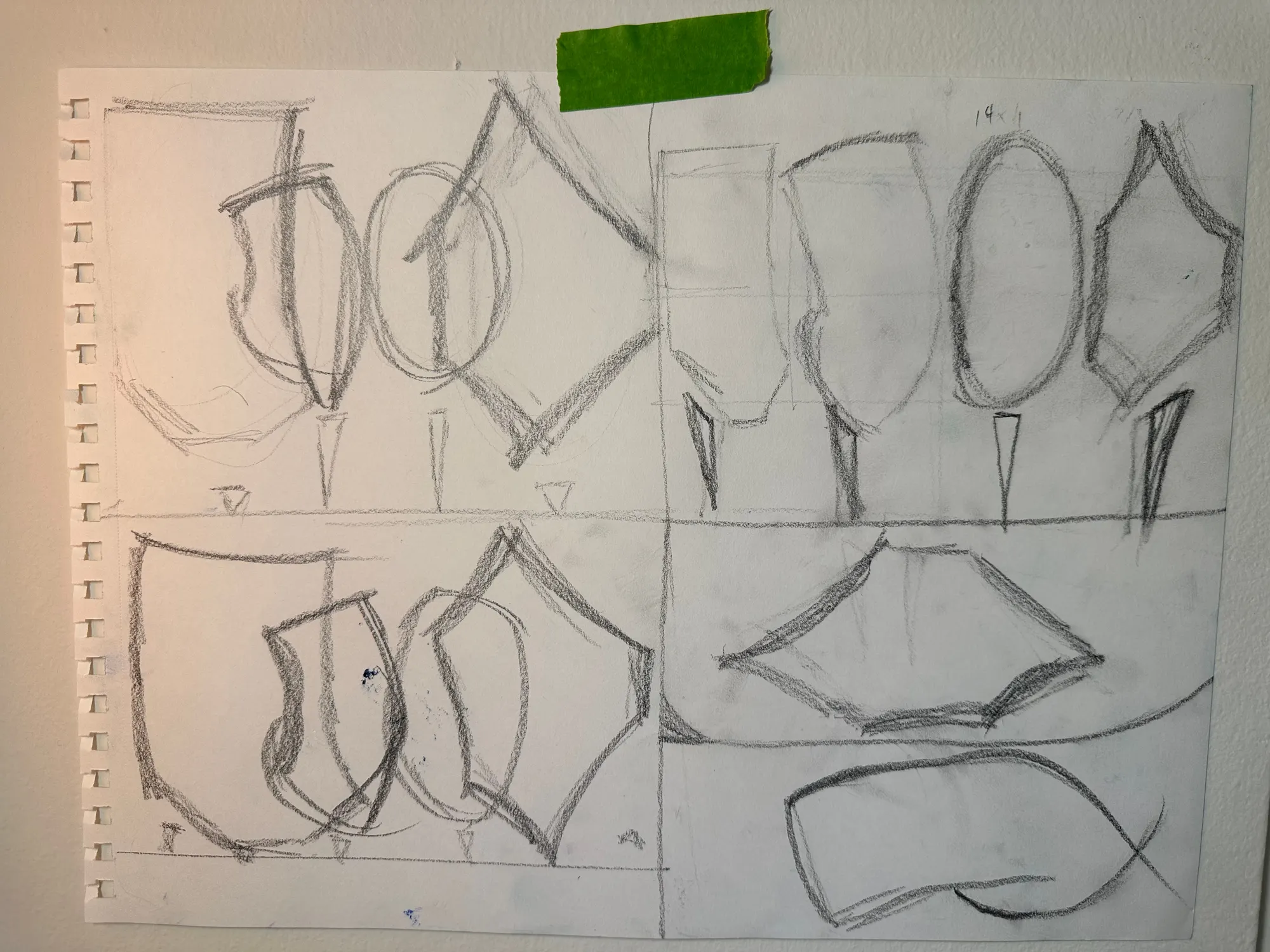
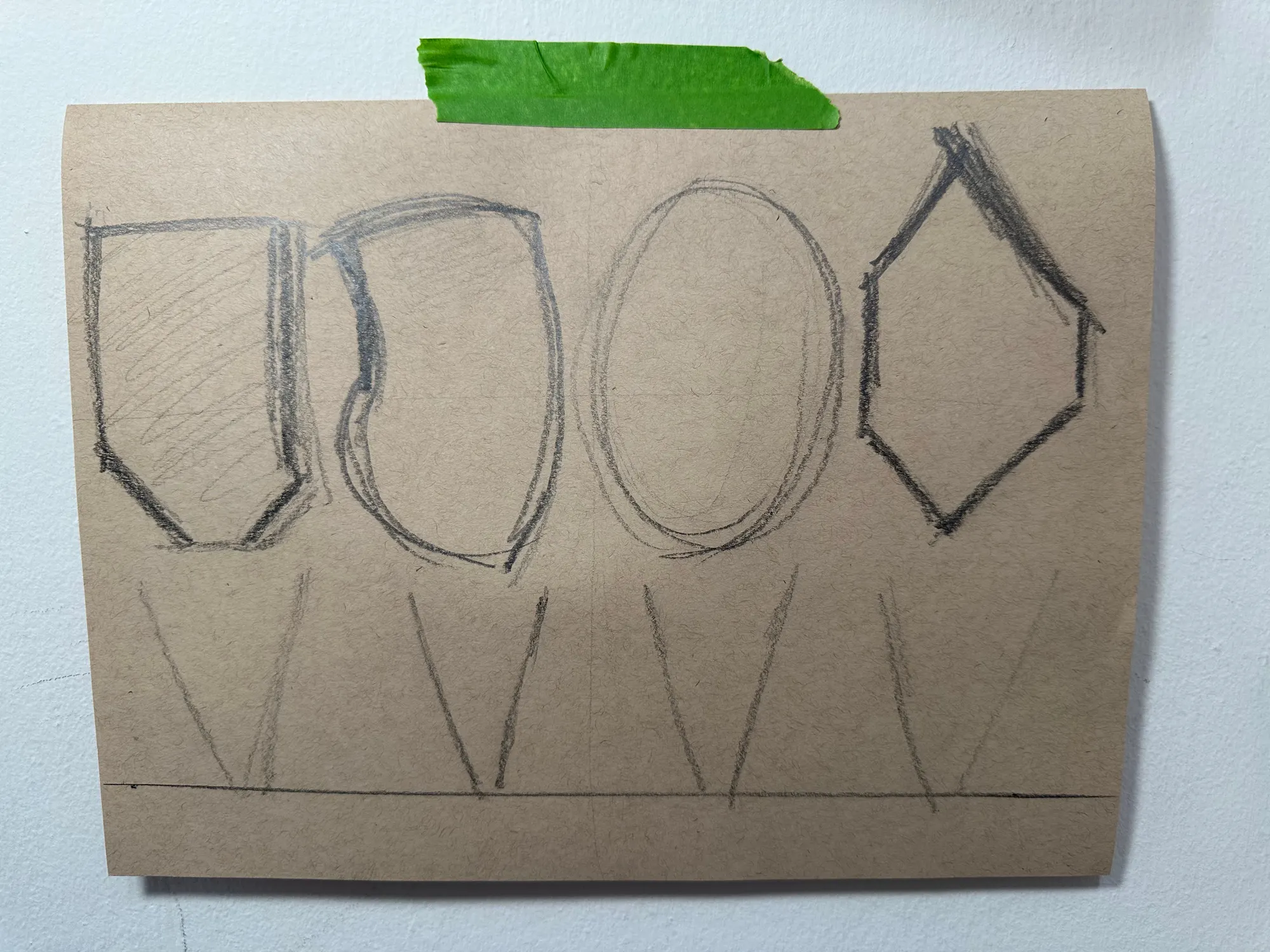
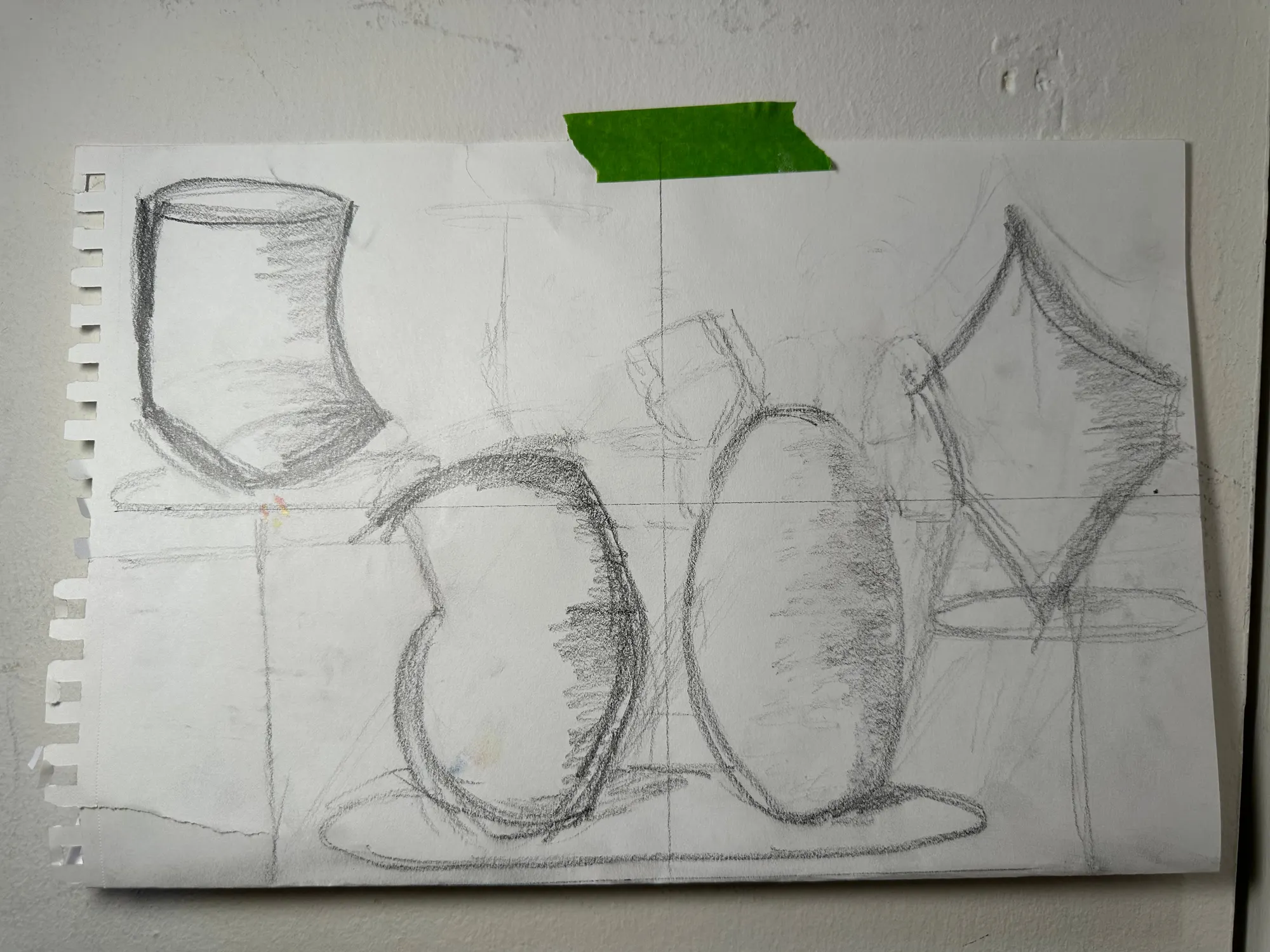
What came out the other end: a round yellow-green mass, a magenta form leaning forward, a shape of sharp edges and points in dark teal, and a blue vessel tipped back on itself. The yellow-green and the magenta share a stand, close enough to touch. The teal has a pedestal to itself. The blue one is the only one whose edge is cut by another.
Every object carries some yellow in it. The colour reflecting off of all the rest.
Colour took as long as shape. I tested through twenty-four paints, cutting each one through a value scale with white to see how it would look when muted.
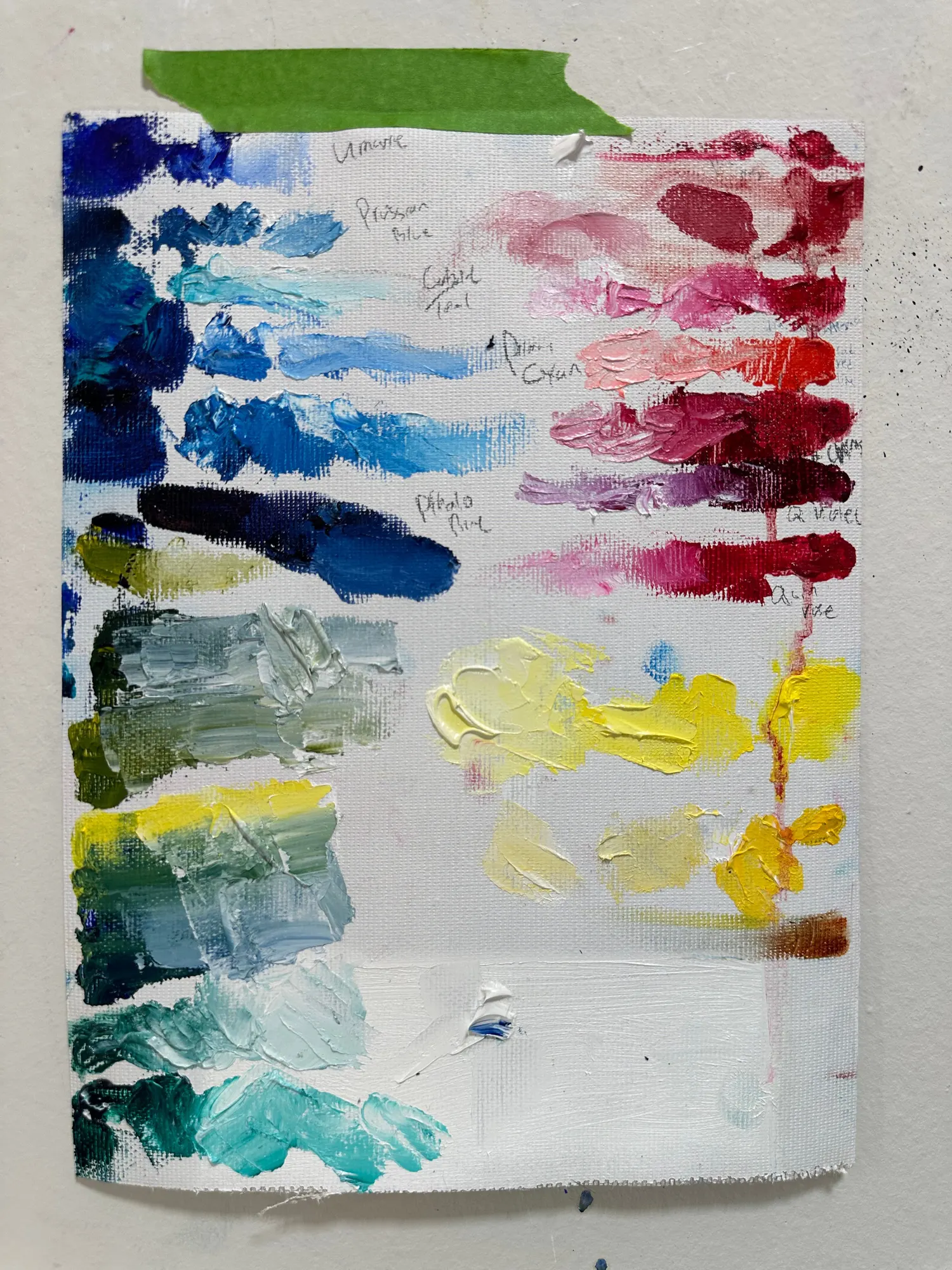
Then two full studies at nine by twelve before the real one. One of them I liked and did not use.
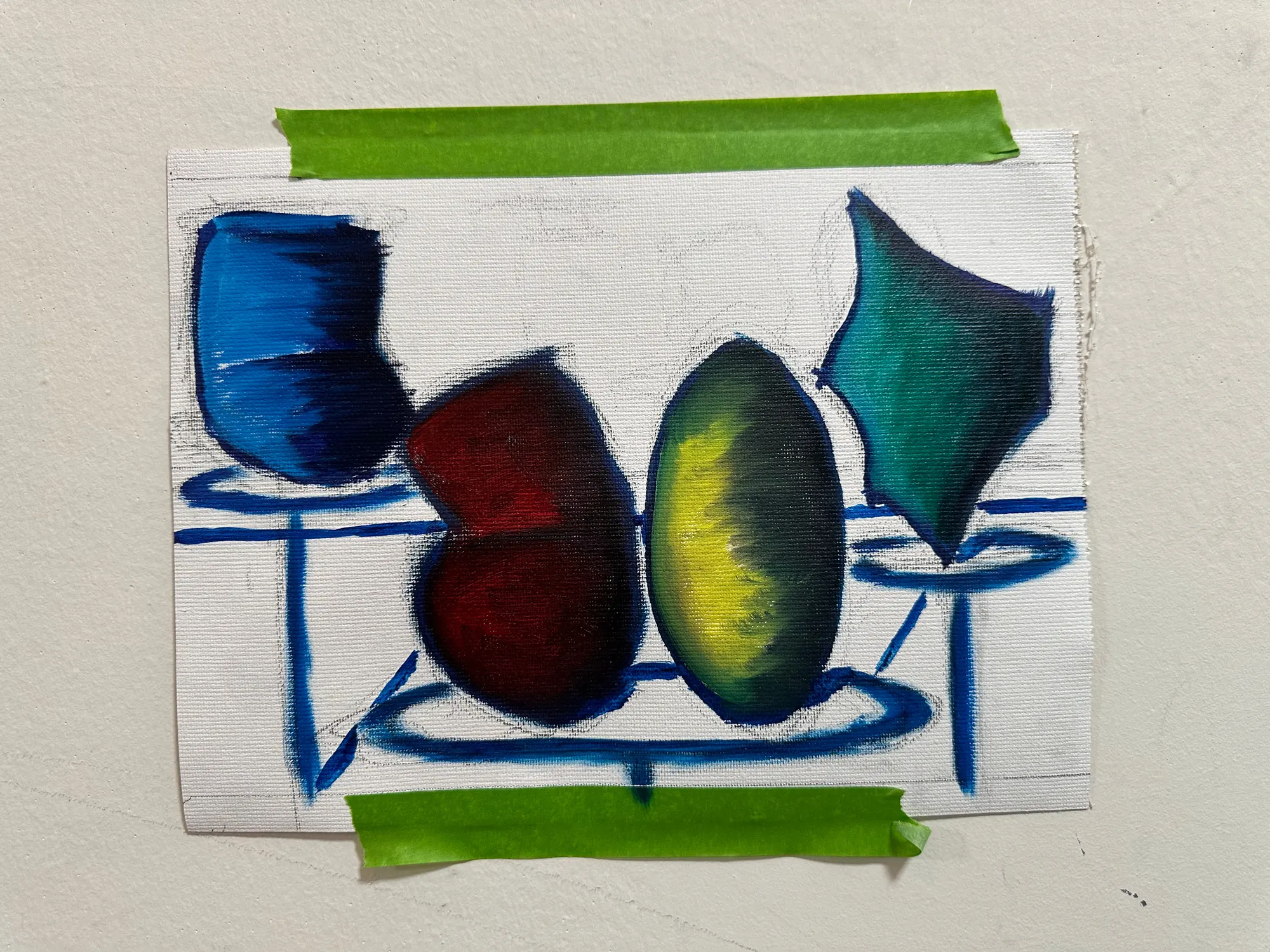
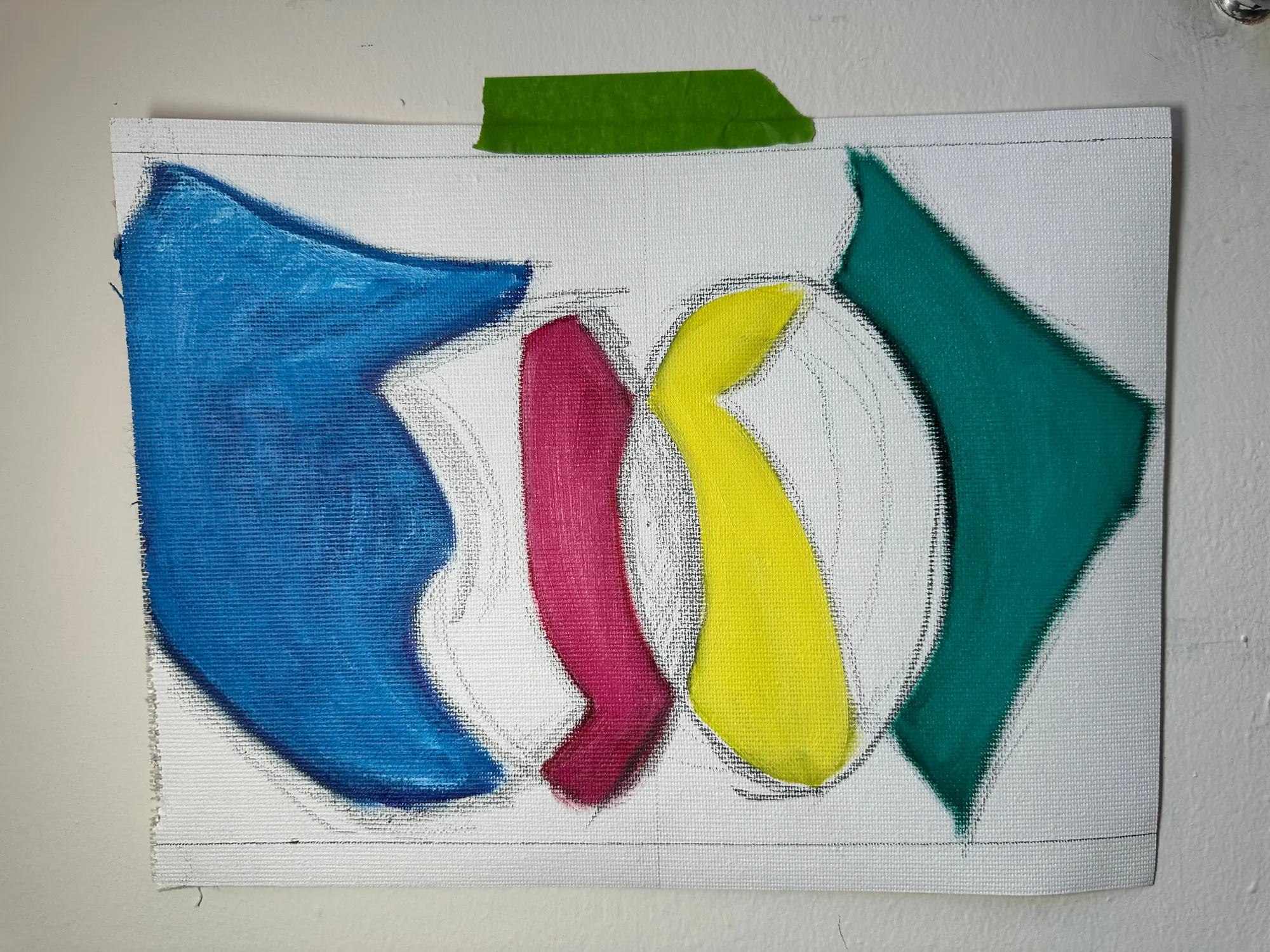
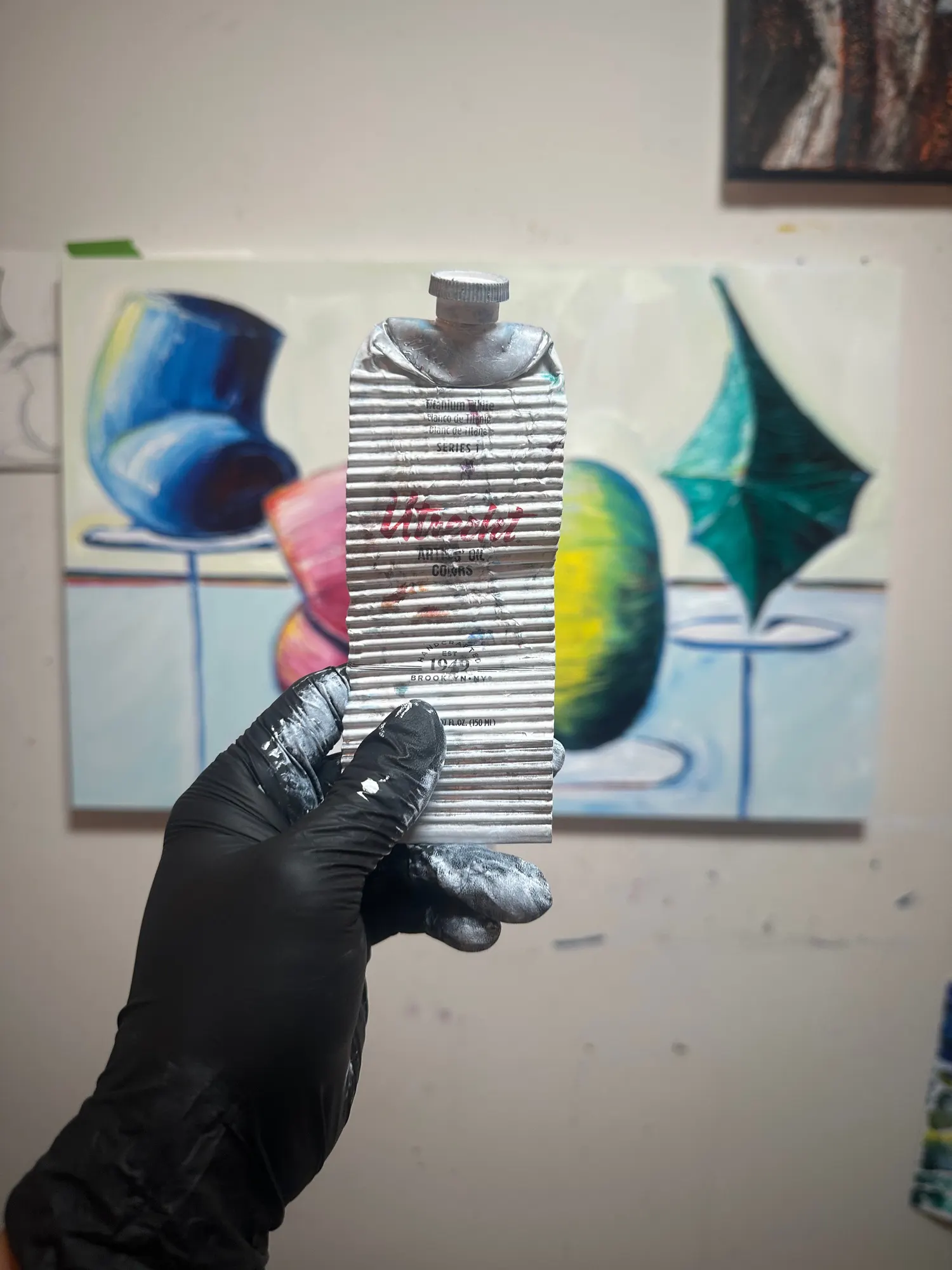
The paint went on thick. A full 150ml tube of titanium white went into this painting.
You float down an endless hallway. Passing identical doors.
You select one at random. The door struggles open on hinges seized from disuse.
Inside is blindingly bright. The room indescribably large. A floor pushing off into infinity. Meeting a wall which rises to a terminus out of sight.
In the room sit four objects. Supernaturally dense in their vibrancy.
They are turned away. Facing one another, locked in conversation.
Your eyes adjust in time to catch the motion.
Together, all four turn to you.
From out of the canvas, these four will look back out at you. Studying you as you study them.
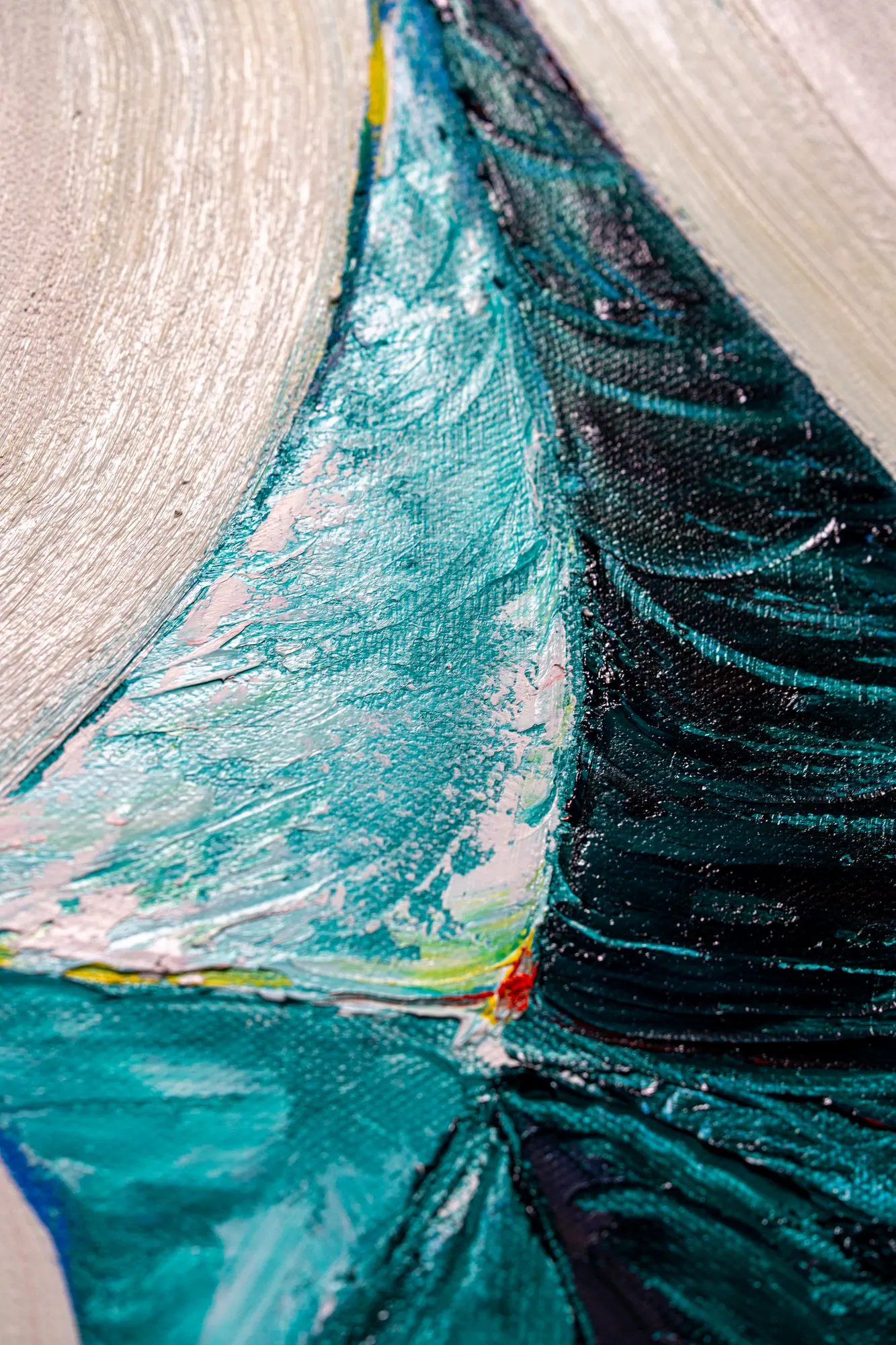
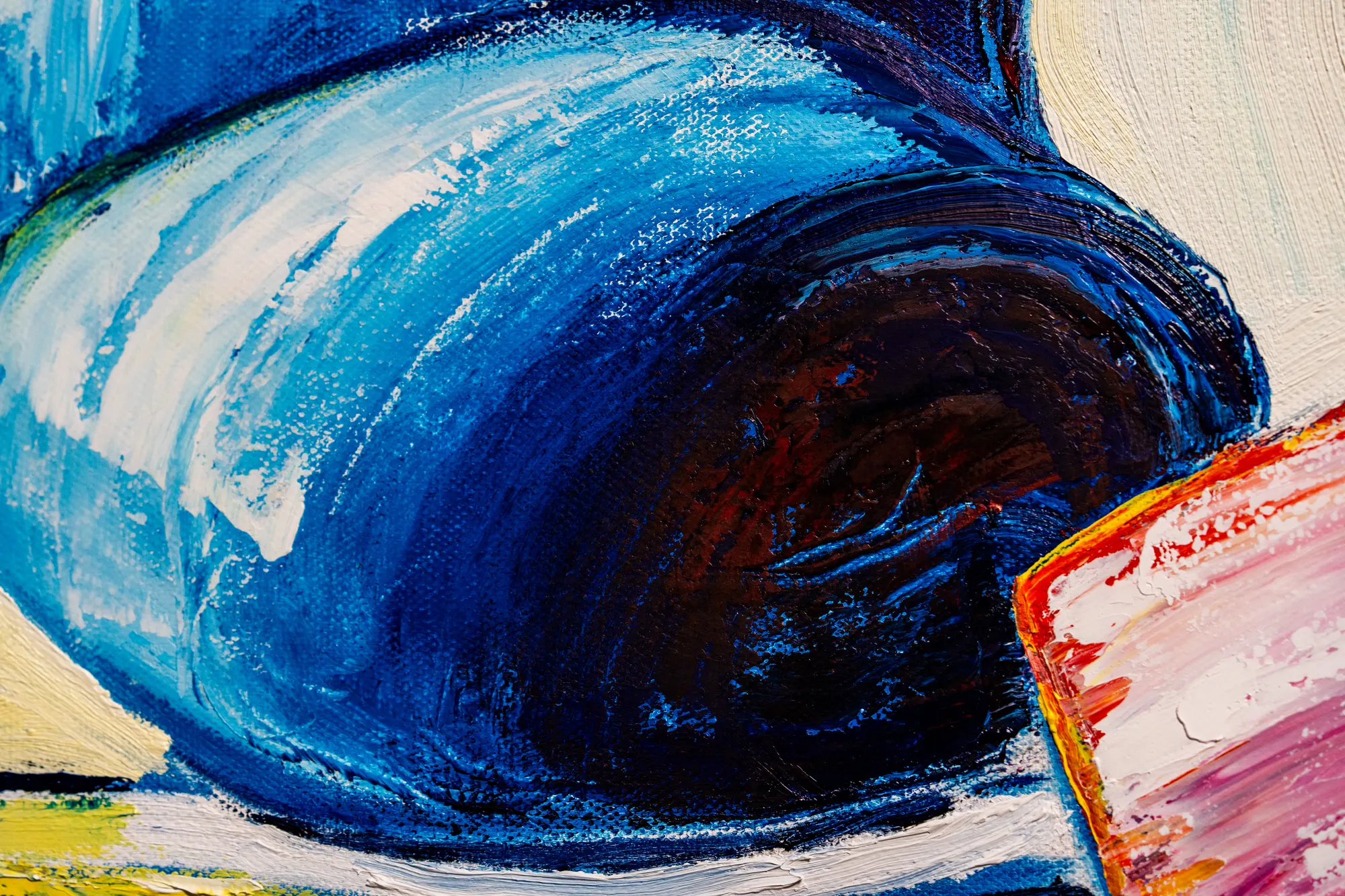
I gift Display Room to Bernard.
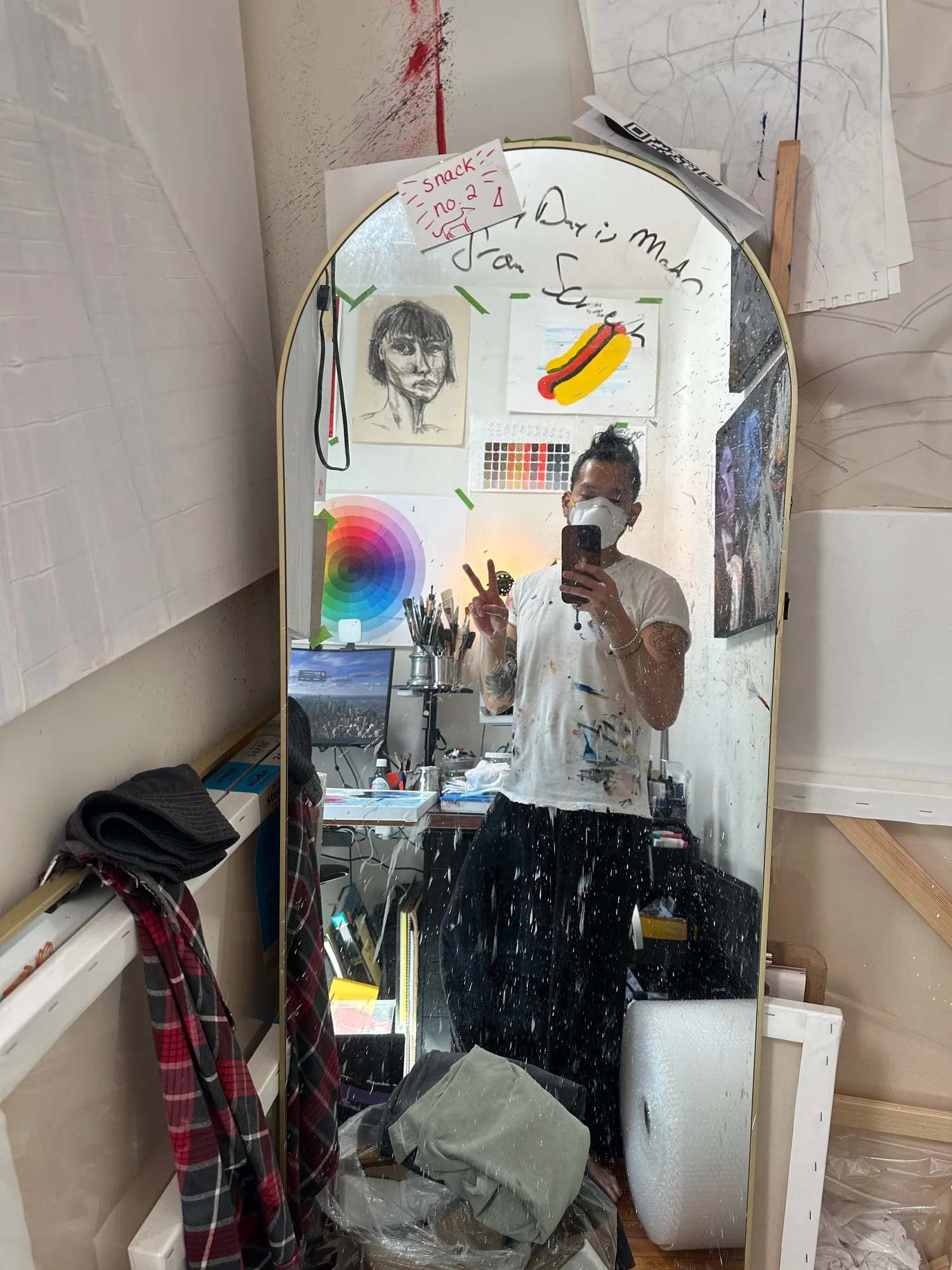
Eight months later. Here's the final day of varnishing.
Fourth painting not yet started. We've all got one more picture to stand in.
Hope you all enjoy your paintings. Let's catch up soon.